Fujitron EU-1C Wireless B-Scan: The Future of Portable Ocular Ultrasonography
Ocular ultrasonography remains one of the most indispensable diagnostic modalities in ophthalmology. Despite remarkable advances in retinal imaging, optical coherence tomography (OCT), and fundus photography, there are numerous clinical scenarios where optical visualisation of the posterior segment is either limited or entirely impossible.
Dense cataracts, vitreous haemorrhage, corneal opacities, endophthalmitis, ocular trauma, and retinal detachments continue to require diagnostic tools capable of visualising structures hidden behind opaque ocular media.
For decades, conventional B-scan ultrasound systems have fulfilled this role. However, the emergence of portable wireless technologies is fundamentally changing how ocular ultrasonography is performed.
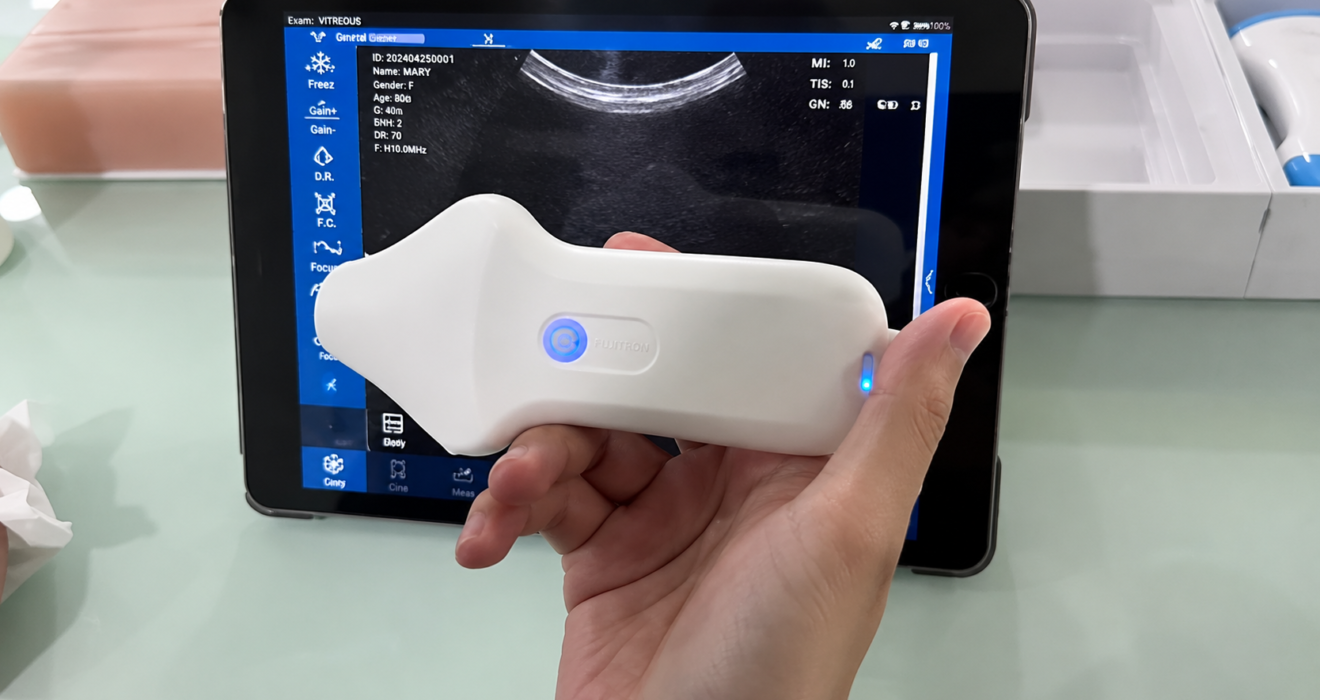
Among the most notable innovations in this category is the Fujitron Digital Pocket Wireless B-Scan (Model EU-1C) — a compact, dual-frequency ophthalmic ultrasound device designed to bring advanced posterior segment imaging directly to the patient.
Rather than being confined to a dedicated imaging room, clinicians can now perform high-quality ocular ultrasonography in outpatient clinics, emergency departments, operating rooms, outreach camps, and even bedside settings.
The Evolution of Ocular Ultrasonography: Why Handheld Wireless B-Scan Systems Are Redefining Posterior Segment Diagnostics
Although OCT and fundus imaging have become routine components of ophthalmic practice, ultrasound continues to serve a unique diagnostic role.
Unlike optical imaging technologies, ultrasound waves can penetrate media opacities that obstruct direct visualisation.
This makes B-scan ultrasonography invaluable in conditions such as:
- Dense cataracts
- Vitreous hemorrhage
- Retinal detachment
- Choroidal detachment
- Ocular trauma
- Endophthalmitis
- Intraocular tumors
- Posterior segment inflammation
In many of these cases, B-scan imaging may be the only reliable method for evaluating posterior segment pathology before surgical intervention.
Limitations of Conventional Ophthalmic Ultrasound Systems
Traditional ophthalmology ultrasound systems have served clinicians well for many years. However, they often present operational limitations.
These may include:
- Bulky console-based architecture
- Dedicated room requirements
- Reduced mobility
- Dependence on electrical infrastructure
- Difficult deployment in outreach environments
- Limited accessibility for bedridden patients
As ophthalmology increasingly moves toward patient-centric and decentralised healthcare delivery models, these limitations become more apparent.
The Rise of Handheld Wireless B-Scan Technology
Modern handheld B-scan ultrasound devices represent a major advancement in ophthalmic diagnostics.
The Fujitron EU-1C has been developed specifically to address the growing need for mobility without sacrificing diagnostic utility.
Unlike conventional ultrasound systems, the device offers:
- Wireless operation
- Compact handheld design
- Real-time imaging
- Smartphone connectivity
- Tablet connectivity
- High portability
- Fast deployment capability
This flexibility allows clinicians to perform diagnostic imaging in environments where traditional systems would be impractical.
Understanding Dual-Frequency Imaging: Why 8 MHz and 11 MHz Matter
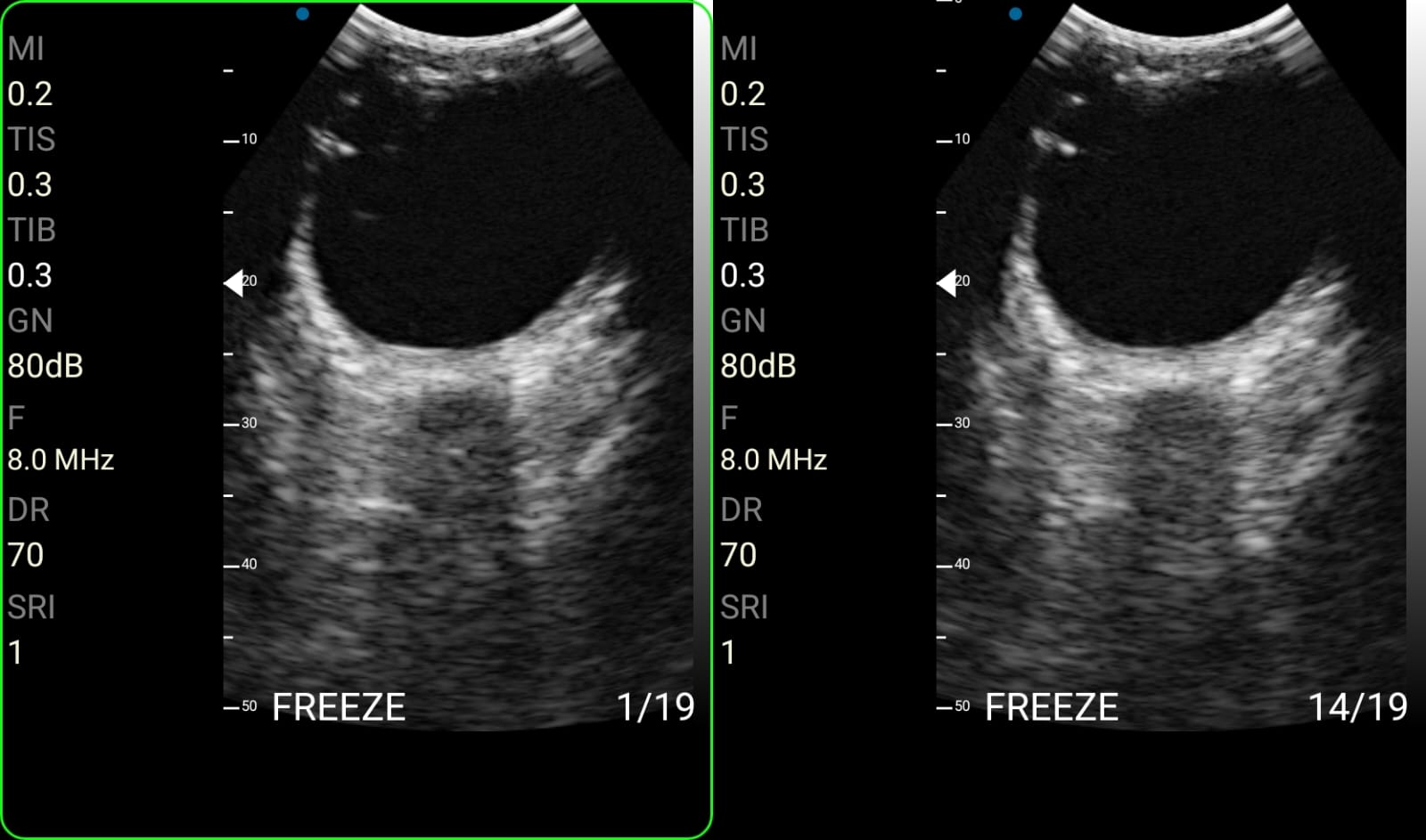
One of the most technically significant features of the Fujitron EU-1C is its dual-frequency imaging capability.
The device operates at both:
- 8 MHz
- 11 MHz
This dual-frequency architecture allows clinicians to optimize imaging based on clinical requirements.
11 MHz Mode – High Resolution Ocular Imaging
The 11 MHz frequency is particularly useful for:
- Retinal evaluation
- Vitreous pathology
- Posterior vitreous detachment assessment
- Membrane visualization
- Detailed posterior segment imaging
The higher frequency provides superior image resolution, making it ideal for structures requiring greater detail.
8 MHz Mode – Enhanced Penetration and Orbital Evaluation
The 8 MHz frequency provides greater tissue penetration.
This becomes advantageous when evaluating:
- Orbital pathology
- Retrobulbar lesions
- Optic nerve abnormalities
- Extraocular muscle pathology
- Deep ocular structures
The ability to switch frequencies effectively expands the diagnostic versatility of the device.
Orbital Mode: Expanding the Scope of Ocular Ultrasonography
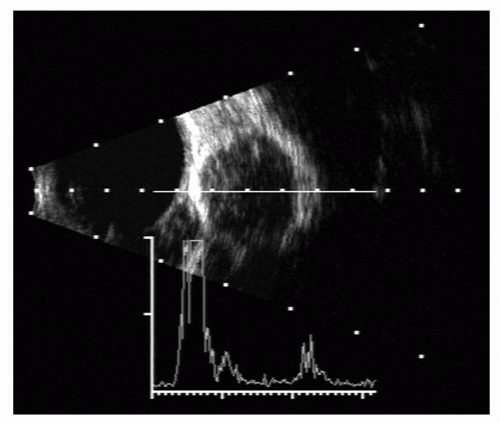
Many clinicians associate B-scan ultrasonography primarily with retinal diagnostics.
However, the orbital mode available within advanced systems such as the EU-1C significantly broadens its clinical utility.
Orbital ultrasonography may assist in evaluating:
- Orbital masses
- Extraocular muscle abnormalities
- Optic nerve pathology
- Thyroid eye disease
- Retrobulbar hemorrhage
- Orbital inflammatory conditions
- Trauma-related orbital changes
This additional capability allows the device to serve both ophthalmologists and orbital specialists.
Why Portability Matters in Real-World Clinical Practice
The practical value of portable ophthalmic diagnostic equipment extends beyond convenience.
Portability directly impacts clinical accessibility.
The Fujitron EU-1C enables examinations in:
- Emergency departments
- ICU settings
- Outreach screening camps
- Rural healthcare centers
- Bedside consultations
- Operating theaters
- Mobile eye care units
This is especially valuable when dealing with elderly, pediatric, immobilised, or critically ill patients who may struggle to access conventional imaging facilities.
Mass Screening and Community Eye Care Applications
One of the most important advantages of portable ophthalmic ultrasound devices is their suitability for large-scale screening programs.
Mass screening initiatives increasingly play a critical role in:
- Rural eye care
- Government healthcare programs
- NGO-led vision campaigns
- Diabetic retinopathy outreach
- Community ophthalmology
The lightweight wireless design of the EU-1C allows rapid deployment in field environments where traditional ultrasound systems would be difficult to transport.
This makes the device particularly useful for ophthalmologists involved in outreach and preventive eye care initiatives.
Mobile and Tablet Integration: A New Era of Diagnostic Flexibility
The EU-1C can be operated through compatible tablets and mobile devices.
This feature offers several advantages:
- Reduced equipment footprint
- Improved portability
- Simplified image review
- Easier report sharing
- Teleophthalmology compatibility
- Faster consultation workflows
As digital ophthalmology continues evolving, mobile integration is becoming increasingly important.
Teleophthalmology and Remote Specialist Consultation
The future of eye care is becoming increasingly connected.
Wireless B-scan ultrasound devices support teleophthalmology workflows by enabling:
- Image sharing
- Remote specialist review
- Cloud-based reporting
- Faster referrals
- Improved rural healthcare accessibility
For healthcare systems seeking to extend specialist expertise beyond metropolitan centers, portable ultrasound systems represent an important enabling technology.
Why Portable Equipment Is Easier to Service
One of the most overlooked advantages of portable ophthalmic equipment is the simplicity of servicing and logistics.
Unlike conventional tabletop systems that may require engineer travel, dismantling, or complex transportation arrangements, portable devices can be shipped quickly and safely for evaluation.
At Mediscience Devices, clinics can courier the device directly to the service facility whenever local technical personnel are unavailable or when immediate support is required.
Following technical evaluation:
- Diagnostic assessment is performed rapidly
- Repair requirements are identified
- Service timelines are communicated clearly
If repairs are expected to exceed five working days, Mediscience can arrange an alternative replacement unit to help minimise disruption to clinical operations.
Once the original device has been repaired and quality-tested, the temporary unit can simply be couriered back.
This approach offers:
- Reduced downtime
- Faster service response
- Operational continuity
- Improved support for remote regions
- Greater confidence for clinic owners
For practices operating in tier-2 and tier-3 cities, this model can significantly improve equipment availability.
The Future of Portable Ocular Imaging
Portable ophthalmic diagnostics continue to evolve rapidly.
Future developments are expected to include:
- AI-assisted image interpretation
- Automated pathology detection
- Cloud-connected reporting
- Predictive diagnostic analytics
- Integrated teleophthalmology platforms
- Advanced image enhancement algorithms
As these technologies mature, handheld ultrasound systems will likely become even more central to ophthalmic diagnostics.
Why Mediscience Devices Supports Modern Ophthalmic Ultrasound Solutions
At Mediscience Devices, we understand that modern eye care requires more than equipment specifications.
Clinicians need diagnostic systems that are:
- Reliable
- Portable
- Serviceable
- Future-ready
Our portfolio includes advanced ophthalmic diagnostic technologies designed to support hospitals, retina specialists, eye clinics, and community eye care programs.
Alongside equipment supply, we remain committed to technical guidance, servicing support, and long-term clinical reliability.
Final Thoughts
The Fujitron EU-1C Wireless B-Scan represents a significant advancement in portable ocular ultrasonography.
Its combination of wireless operation, dual-frequency imaging, orbital mode functionality, tablet integration, and field-ready portability makes it particularly well-suited for modern ophthalmic practice.
As healthcare increasingly moves toward decentralised, technology-enabled care models, handheld ultrasound systems will continue expanding the reach of diagnostic ophthalmology.
For clinicians seeking greater flexibility without compromising diagnostic capability, portable wireless B-scan technology is no longer simply an innovation—it is becoming an essential component of future-ready eye care infrastructure.
Check Mediscience Devices' product catalogue. Connect with Mediscience Devices today.
Frequently Asked Questions (FAQ)
The Fujitron EU-1C is used for ocular ultrasonography, helping diagnose retinal detachments, vitreous haemorrhage, ocular trauma, posterior segment pathology, and orbital abnormalities.
The 11 MHz mode offers higher resolution imaging, while the 8 MHz mode provides deeper penetration for orbital and posterior structure assessment.
Yes. Its handheld wireless design makes it highly suitable for pediatric, geriatric, bedridden, and immobile patients.
Yes. The device can be operated through compatible tablets and smartphones, enhancing portability and workflow flexibility.
Portable devices can be couriered directly to Mediscience for technical evaluation. If repairs are expected to take more than five days, a temporary replacement unit can be arranged to minimise downtime.