Tonometer in Nepal: A Buyer’s Guide to Ophthalmic Equipment, Prices and Suppliers
The eye care landscape in Nepal is expanding rapidly. From major tertiary hospitals and medical universities in the Kathmandu Valley (Kathmandu, Lalitpur, Bhaktapur) to growing regional eye care centers in Pokhara, Biratnagar, Bharatpur, Birgunj, Butwal, Janakpur, Dharan, and Nepalgunj, the demand for precise diagnostic technology has never been greater.
At the center of every glaucoma screening and general outpatient department (OPD) setup is the tonometer. Measuring Intraocular Pressure (IOP) is an essential diagnostic step for detecting ocular hypertension and preventing irreversible optic nerve damage caused by glaucoma.
For clinical directors, hospital procurement committees, and medical equipment distributors evaluating a tonometer for Nepalese practices, selecting the right device requires balancing measurement accuracy, patient comfort, mobility, and long-term service support.
This B2B buyer’s guide breaks down the clinical role of tonometry, compares contact vs. non-contact methods, highlights leading models available through Mediscience’s tonometer category, analyzes cost factors, and outlines how sourcing through Mediscience simplifies equipment supply across Nepal.
What Is a Tonometer and Why Is It Important for Eye Clinics?
A tonometer is an essential eyecare tonometer diagnostic instrument engineered to measure the fluid pressure inside the eye, known as Intraocular Pressure (IOP), usually expressed in millimeters of mercury (mmHg).
Because glaucoma is often asymptomatic in its early stages, routine IOP measurement during basic eye examinations is vital for catching early structural changes before irreversible field loss occurs. Choosing a reliable instrument ensures your clinical team captures repeatable, accurate pressure readings across diverse patient demographics.
Contact Tonometer vs. Non-Contact Tonometer: Which Should You Choose?
When evaluating options, procurement managers will encounter two main diagnostic approaches: a contact tonometer and a non contact tonometer.
A. Contact Tonometry
Contact devices require direct interface with the cornea (or eyelid in transpalpebral models).
Indentation Tonometry: Mechanical systems like the Biro Germany or Riester Schiotz Tonometer measure corneal indentation depth using a weighted plunger. They provide a portable, highly budget-friendly option for remote screening.
Rebound Tonometry: Lightweight handheld devices like the Suoer Rebound Tonometer SW-500 use a micro-probe that bounces off the cornea in milliseconds. They require no topical anesthesia, making them ideal for pediatric and uncooperative patients.
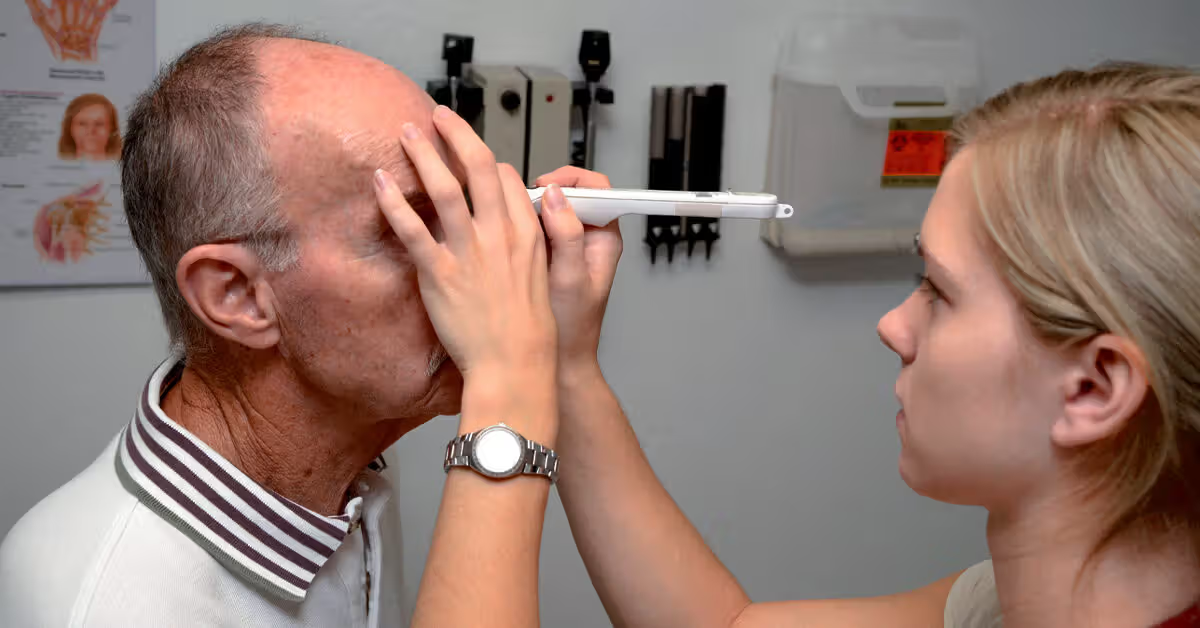
Transpalpebral Tonometry: Portable instruments like the Elamed Transpalpebral Digital Pocket Tonometer TVGD-01 measure IOP through the eyelid, eliminating direct corneal contact and avoiding the need for anesthetic drops or probe sterilizations.
B. Non-Contact Tonometry (Air-Puff)
A non contact tonometer uses a gentle, controlled air impulse to flatten the cornea momentarily, measuring the time or optical reflection needed to achieve applanation.
Workflow Benefits: Because nothing touches the eye, there is zero risk of corneal abrasion or cross-infection, and no topical drops are needed. These systems process high patient volumes quickly, making them popular for screening bays in busy hospitals.
Keeler TonoCare: Portable Non-Contact Tonometer for Eye-Care Professionals
For practices seeking portable air-puff screening, the Keeler TonoCare represents a major advancement in mobile diagnostic technology.The keeler tonocare combines the non-invasive safety of air-puff tonometry with handheld portability. Instead of requiring a patient to lean into a heavy tabletop unit, the operator can bring the device directly to the patient—whether in a consultation chair, wheelchair, or hospital bed. Its gentle air pulse makes it a strong choice for pediatric patients, elderly screening, and community vision camps across Nepal.
Rexxam Tonometers: Features and Equipment Selection Considerations
For high-volume stationary consultation lanes, Rexxam (formerly Shin-Nippon, Japan) provides Japanese optical and mechanical engineering. The Rexxam Shin-Nippon NCT-200 Non-Contact Tonometer features a refined soft-puff mechanism that reduces patient blink reflexes during testing. Its motorized 3D tracking assistance automatically aligns and captures measurements once focused on the pupil. With an ergonomic tilt screen and integrated thermal printer, the NCT-200 anchors busy pre-screening lanes in tertiary hospitals and eye institutes.
Tonometer Price in Nepal: Factors That Affect Equipment Cost
When evaluating a tonometer price proposal, hospital procurement committees should look beyond the hardware quote to consider overall Total Cost of Ownership (TCO).
Key Cost Drivers:
Measurement Technology: Mechanical contact units like Schiotz tonometers provide an accessible entry point. Digital handheld rebound systems, transpalpebral devices, and fully automated tabletop non-contact tonometers sit at higher investment tiers due to advanced optics and internal air pumps.
Portability vs. Stationary Setup: Handheld wireless devices (such as the Keeler TonoCare and Suoer SW-500) add value for mobile screening, home visits, and multi-room OPDs.
Consumables & Maintenance: Consider ongoing costs like disposable probe tips (for rebound units), printing paper, and routine sensor calibration requirements.
Hassle-Free Sourcing: Procuring through an established supplier with operational presence in Nepal removes surprise customs fees, international shipping risks, and transit delays.
Source Ophthalmic Tonometers from Mediscience for Nepal
Mediscience Devices supplies high-grade diagnostic and surgical tools across Nepal, offering direct access to leading global tonometer brands. Understanding the specific diagnostic capabilities of each system allows clinical teams to select the exact platform required for their operational needs.
Suoer Rebound Tonometer SW-500: Portable Wireless Digital Diagnostic System
The Suoer Rebound Tonometer SW-500 offers an innovative, non-invasive approach to intraocular pressure measurement. Utilizing advanced rebound technology, the SW-500 projects a lightweight, single-use micro-probe that briefly makes contact with the cornea for a fraction of a second before rebounding back. Because the impact is so rapid and gentle, the measurement causes no corneal discomfort, completely eliminating the need for topical anesthetic drops. This feature makes the Suoer SW-500 an exceptional asset for pediatric ophthalmology bays, screening uncooperative patients, and handling high-volume community outreach camps. The device operates wirelessly with a clear digital interface, storing multiple reading sets and calculating average IOP values automatically to ensure clinical precision.
Keeler TonoCare Wireless Non-Contact Tonometer: Lightweight Handheld Air-Puff Screening
The Keeler TonoCare brings non-invasive air-puff tonometry directly into a lightweight, ergonomic handheld form factor. Traditionally, non-contact tonometry required heavy tabletop consoles that anchored patients to a rigid chinrest. The Keeler TonoCare changes this paradigm by using a soft, controlled air-pulse engine housed inside a mobile handpiece. Clinicians can perform rapid non-contact IOP testing while the patient sits comfortably in a standard examination chair, a wheelchair, or a hospital bed. Equipped with an intelligent alignment assist system and a wireless base charger with data output capabilities, the TonoCare provides fast, hygienically safe screening without the risk of cross-contamination or corneal abrasion.
Rexxam Shin-Nippon NCT-200: High-Volume Desktop Air-Puff Suite
Engineered in Japan, the Rexxam Shin-Nippon NCT-200 Non-Contact Tonometer is designed to anchor heavy-duty pre-examination OPD lanes in tertiary hospitals and busy eye centers. The NCT-200 features a proprietary soft-puff air impulse system that minimizes patient blink reflexes during measurement capture. Its motorized 3D auto-tracking system assists technicians by automatically aligning the optical head with the pupil and triggering the air puff once optical focus is achieved. The instrument includes a tiltable high-resolution color LCD screen, a motorized chinrest for rapid patient height adjustment, and an integrated thermal printer that outputs comprehensive IOP test reports immediately for patient files.
Elamed Transpalpebral Digital Pocket Tonometer TVGD-01: Through-the-Eyelid IOP Measurement
The Elamed Transpalpebral Digital Pocket Tonometer TVGD-01 introduces a unique clinical technique by measuring intraocular pressure directly through the upper eyelid (transpalpebral method). Because the device never touches the cornea, clinicians can measure IOP without applying anesthetic drops, performing fluorescein staining, or sterilizing corneal probe tips between patients. This makes the TVGD-01 invaluable for post-operative cataract patients with delicate corneal incisions, individuals with severe corneal scarring or leucomas, and emergency room evaluations where direct corneal contact is contraindicated. Compact and battery-operated, it fits easily into a lab coat pocket for bedside hospital rounds.
Biro Germany or Riester Schiotz Tonometer: Classical Indentation Tonometry
The Biro Germany or Riester Schiotz Tonometer represents the gold-standard classical mechanical approach to corneal indentation measurement. Crafted with precision German mechanical components, this time-tested instrument uses a weighted plunger system to measure the depth of corneal indentation under a known load. Readings are read off a precision scale and converted into mmHg using standardized conversion tables. Known for its exceptional mechanical durability, zero dependence on electrical power or internal batteries, and high cost-effectiveness, the Schiotz tonometer remains a vital diagnostic tool for peripheral health posts, rural screening drives, and primary healthcare centers requiring robust, low-maintenance equipment.
Localized Sourcing Advantage with Mediscience in Nepal
Mediscience is established directly in Nepal, making equipment procurement, billing, and technical servicing seamless for healthcare providers across the country.
Benefits for Nepalese Buyers:
Simplified Local Purchasing: Procure high-end ophthalmic diagnostic tools directly with local billing and convenient ordering.
Doorstep Delivery: We handle cross-border freight logistics and local fulfillment, delivering directly to your facility in Kathmandu, Pokhara, Biratnagar, Janakpur, or anywhere across Nepal.
In-Country Technical Support: Dedicated biomedical engineers assist with physical setup, operational guidance, and routine calibration checks.
Conclusion
Investing in a high-precision tonometer is essential for effective glaucoma screening, patient safety, and clinical thoroughness. Whether your practice needs mobile wireless units like the Keeler TonoCare and Suoer SW-500, heavy-duty desktop air-puff consoles like the Rexxam NCT-200, specialized transpalpebral devices like the Elamed TVGD-01, or classic mechanical instruments like the Riester Schiotz Tonometer, Mediscience Devices brings direct local availability and reliable service across Nepal.
Contact Mediscience Devices today to request an official quotation, explore localized pricing for Nepal, and schedule an equipment demonstration for your facility.
People Also Ask
Yes. Mediscience operates directly in Nepal, allowing healthcare facilities, eye hospitals, and clinics to purchase diagnostic equipment seamlessly with localized billing and local support.
A contact tonometer touches the corneal surface (or eyelid) to measure pressure, often requiring anesthetic drops or disposable probes. A non-contact tonometer uses a gentle puff of air to flatten the cornea momentarily, measuring pressure without touching the eye or requiring numbing drops.
No. Rebound tonometers (such as the Suoer SW-500) use an ultra-lightweight probe that touches the cornea for a fraction of a second, making the measurement comfortable without topical anesthetic drops.
Yes. Mediscience Devices specializes in complete clinic setups. Buyers can bundle tonometers alongside autorefractors, slit lamps, fundus cameras, ultrasound AB-scans, and operating microscopes into a single, cost-effective procurement package.