Buy Portable Ultrasound Machine & Advanced Diagnostic Equipment for Clinics and Eye Hospitals
In today’s fast-paced clinical landscape, point-of-care diagnostics are no longer a luxury—they are an operational necessity. For Chief Medical Officers (CMOs), senior ophthalmologists, radiologists, and healthcare procurement directors, replacing or supplementing bulky, tethered cart units with a B-scan machine represents a major shift toward clinical agility and patient throughput.
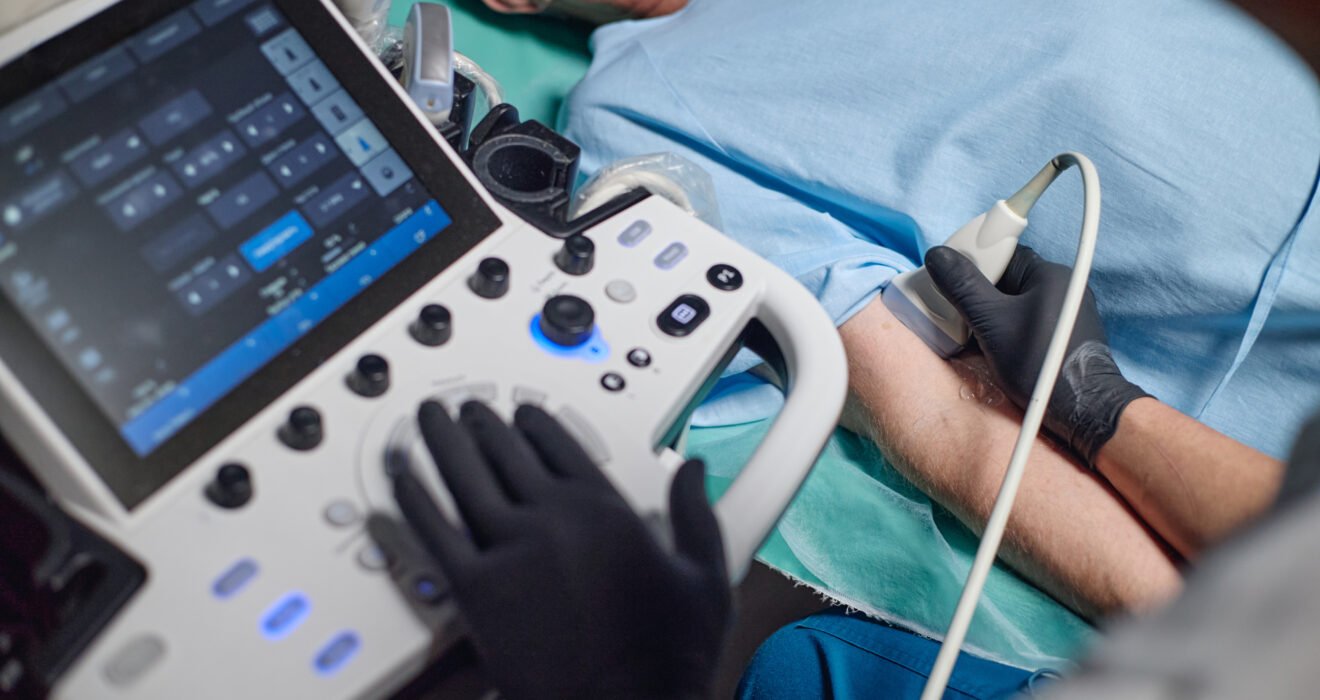
Whether performing emergency triage in an ICU, evaluating posterior segment pathologies in an eye clinic through dense opacities, or running rural screening camps, deploying a high-resolution handheld ultrasound machine directly at the bedside drastically reduces chair time and eliminates external diagnostic delays.
However, navigating the B2B medical equipment market presents significant financial and operational hurdles. With numerous vendors marketing rebranded Original Equipment Manufacturer (OEM) devices at inflated markups, healthcare enterprise buyers must carefully evaluate underlying acoustic hardware, total cost of ownership (TCO), software licensing models, and long-term Service Level Agreements (SLAs).
As one of Eastern and North-Eastern India’s most trusted medical equipment suppliers with over 27 years of institutional service, Mediscience Devices presents this definitive buyer’s guide tailored specifically for medical professionals and hospital procurement committees planning to buy portable ultrasound machine technology.
The Clinical Imperative: Point-of-Care Ultrasound (POCUS) in Modern Medicine
Modern healthcare delivery demands speed, precision, and patient safety. Traditional cart-based ultrasound scanner systems require dedicated rooms, specialized power infrastructure, and constant patient transfer—creating severe bottlenecks during peak Outpatient Department (OPD) hours.
Key Clinical Drivers for Enterprise Adoption:
Immediate Diagnostic Confirmation: Clinicians obtain real-time grayscale kinetic scans directly during patient consultation, accelerating decision-making for surgical interventions or immediate referrals.
Internal Revenue Retention: Equipping your OPD with an ophthalmic b scan machine or general portable ultrasound equipment keeps diagnostic scanning in-house, preventing revenue loss from external patient referrals.
Superior Infection Control: Solid-state, wireless probes eliminate long, ribbed transducer cables that drag across clinical floors, making them easier to disinfect with medical-grade wipes between patient examinations.
Technical Evaluation Criteria for Doctors and Procurement Officers
When evaluating an ultrasound machine for institutional purchase, technical committees must look past glossy marketing brochures and verify core engineering parameters.
A. Acoustic Transducer Frequency & Resolution
The primary determinant of diagnostic clarity is transducer frequency:
High-Frequency Ophthalmic Probes (8 MHz to 11 MHz / 20 MHz): Essential for b scan ultrasonography. Provides high axial and lateral resolution needed to differentiate subtle retinal detachments from vitreous membranes, detect intraocular foreign bodies, and measure choroidal masses.
Mid-to-Low Frequency Probes (2 MHz to 7.5 MHz): Designed for deep abdominal, vascular, or cardiac penetration where penetration depth matters more than spatial resolution.
B. Display Architecture: BYOD vs. Proprietary Lock-In
A major cost-driver when purchasing a portable ultrasonography machine is the display interface:
Proprietary Vendor Displays: Force hospitals to purchase expensive, vendor-locked monitors. If a monitor fails, replacement costs are high and repair turnarounds are slow.
Bring Your Own Device (BYOD) Systems: Utilize open-platform Wi-Fi transmission, allowing the handheld probe to connect directly to standard commercial tablets (Apple iPad, Samsung Galaxy Tab, Windows Surface). This slashes initial CapEx and allows immediate tablet replacement without operational downtime.
C. Data Integration & DICOM Compliance
For multi-specialty hospitals and eye institutes, portable diagnostic tools must feature seamless DICOM export capabilities, allowing cine-loops (video clips) and still images to populate Electronic Health Records (EHR) and Hospital Information Systems (HIS) automatically.
Product Comparison: Selecting the Right Diagnostic Architecture
To assist hospital purchasing committees in selecting the precise form factor for their clinical volume, the matrix below compares a mobile wireless probe system with a turnkey desktop workstation.
| Evaluation Parameter | Matrix Fujitron EU-1C (Pocket Wireless B-Scan) | Suoer SW-2000 (Turnkey Workstation) |
| Primary Form Factor | Solid-state wireless b scan probe (<150 grams) | Desktop processing module + Laptop + Printer |
| Acoustic Frequencies | Selectable Dual-Frequency (8 MHz & 11 MHz) | 10 MHz High-Resolution Sector Probe |
| Display Connectivity | Open BYOD (iOS, Android, Windows Tablets via Wi-Fi) | Pre-configured, high-definition hospital laptop |
| Power Source | Internal rechargeable Lithium-ion battery | AC Mains powered workstation |
| Ideal Clinical Setting | Emergency triage, pediatric wards, ICU, eye camps | Dedicated diagnostic suites, high-volume OPDs |
| Product Link | Matrix Fujitron EU-1C Details | Suoer SW-2000 System Details |
Selecting the Right Partner: From Supplier to Full-Lifecycle Service Provider
Procurement teams often evaluate vendors based solely on catalog pricing, overlooking post-sale service capabilities. Choosing a vendor that functions as both a certified medical instrument supplier and an authorized service organization provides long-term operational advantages.
Key Vetting Questions for Vendor Selection:
Does the vendor maintain a local spare parts inventory? Independent suppliers that do not stock original replacement components must import parts as needed, extending downtime by weeks.
Are technicians factory-trained and certified? Third-party contractors often lack model-specific service manuals, proprietary calibration software, and dedicated testing jigs.
Does the vendor offer guaranteed SLA response times? Leading service organizations guarantee engineer dispatch within 24 to 48 hours, supported by temporary loaner units during complex overhauls.
What maintenance contract structures are available? Flexible providers offer tailored Annual Maintenance Contracts (AMC) and Comprehensive Maintenance Contracts (CMC) aligned with your facility’s operational volume.
Master Comparison: AMC vs. CMC Service Models
When establishing an enterprise agreement for medical equipment repair services, facility managers typically evaluate two primary contract structures:
| Service Parameter | Annual Maintenance Contract (AMC) | Comprehensive Maintenance Contract (CMC) |
| Preventive Maintenance Visits | Included (Scheduled 2–4 times annually) | Included (Scheduled 2–4 times annually) |
| Emergency Repair Labor | Included (Unlimited breakdown calls) | Included (Unlimited breakdown calls) |
| Replacement Spare Parts | Charged extra per incident | Fully Included (Covers optics, PCBs, motors) |
| Consumable Components | Excluded | Excluded (Unless specified) |
| Budget Predictability | Variable (Depends on hardware failures) | 100% Fixed Annual Cost |
| Target Equipment Tier | Secondary diagnostic tools, robust tables | High-value, complex diagnostic & surgical systems |
Deconstructing the "Rebrand & Price Markup" Trap
Enterprise buyers frequently encounter wide price variations for devices that appear to share similar physical designs. Understanding how medical device supply chains operate is critical before issuing a purchase order or tender:
Software Smoothing vs. Raw Acoustic Physics: Certain marketing companies purchase standard OEM wireless probes, apply digital smoothing filters, and label them as “proprietary AI R&D breakthroughs” to justify high markups. Doctors require raw, unadulterated acoustic signal processing—artificial smoothing can hide low-reflective vitreous membranes or subtle scleral tears.
Hidden Subscription Licenses: Ensure the device software does not require recurring annual cloud or user-license fees. Open-architecture platforms like the Matrix Fujitron EU-1C provide full software functionality without recurring subscription costs.
Local Maintenance Infrastructure: Buying an imported machine from an unverified online reseller often leaves hospitals stranded when a transducer or power supply fails. Ensure your supplier maintains a local depot of spare parts and standby replacement units.
Total Cost of Ownership (TCO) vs. Initial Capital Outlay
When hospital finance committees decide to buy portable ultrasound machine setups, evaluating initial purchase cost alone presents an incomplete financial picture.
A complete TCO calculation should include:
Initial Procurement Cost: Device, essential transducers, and initial software setup.
Display Maintenance Costs: BYOD tablet platforms reduce long-term display repair expenses by 60% compared to proprietary medical monitors.
Post-Warranty Servicing: The cost of annual maintenance contracts (AMC/CMC) and local availability of replacement piezo-crystals or battery modules.
Operational Downtime Risk: The financial impact of a machine going offline for several weeks due to lack of local technical support.
The Mediscience Advantage: Enterprise Partnership for Healthcare Facilities
Sourcing capital diagnostic equipment is an ongoing operational partnership. Mediscience Devices has served as a premier medical equipment supplier in India for over 27 years, supporting corporate hospital chains, private practices, government medical colleges, and charitable institutes across Eastern and North-Eastern India (including West Bengal, Bihar, Jharkhand, Odisha, Assam, and Chhattisgarh).
Why Enterprise Procurement Committees Partner with Mediscience:
Factory-Direct Pricing: We eliminate middleman markups and expensive advertising taxes, delivering pure engineering value directly to your purchasing department.
Turnkey On-Site Deployment: Our factory-trained biomedical engineers conduct site inspection, doorstep delivery, precision acoustic calibration, and thorough application training for your medical staff.
Guaranteed Service Level Agreements (SLAs): We maintain a local depot of spare transducers, battery packs, and standby replacement units in Kolkata, ensuring rapid engineer dispatch and zero clinical downtime.
Elevate Your Facility's Diagnostic Standards
Investing in modern portable ultrasound equipment elevates diagnostic speed, increases patient satisfaction, and safeguards hospital revenue. Whether your institution requires the pocket mobility of the wireless Matrix Fujitron EU-1C B-Scan or the complete reporting workflow of the Suoer SW-2000 Workstation, Mediscience Devices provides authentic technology, transparent pricing, and local engineering support.
Modernise your clinical diagnostic workflow with trusted technology.
Contact the B2B Procurement Division at Mediscience Devices today to request an official quotation, schedule an on-site clinical demonstration, or consult with our biomedical equipment specialists.
People Also Ask - Commercial & Clinical FAQs
Doctors should prioritize acoustic frequency alignment (matching probe MHz to clinical specialty), display flexibility (open BYOD tablet compatibility vs. expensive proprietary monitors), zero-latency image transmission, DICOM export options, and the supplier's local service SLA capabilities.
Yes. Modern pocket wireless B-scans—such as the Matrix Fujitron EU-1C—house the complete acoustic engine, magnetic convex motor, and signal digitizer directly inside the probe head. They deliver 256-grayscale resolution at 11 MHz and 8 MHz frequencies identical to traditional cart-based ultrasound scanner consoles, but with far greater mobility and lower CapEx.
Yes. Advanced systems allow doctors to save high-resolution cine-loops and static scans directly to standard tablets, exporting files via DICOM or secure local networks straight into the hospital's Electronic Health Record (EHR) or Hospital Information System (HIS).
Dual-frequency scanning allows clinicians to switch between high-resolution and deep-penetration modes on a single probe. For example, an 11 MHz mode delivers fine structural resolution of the retina, macula, and vitreous, while an 8 MHz mode provides deeper penetration past the sclera to evaluate retrobulbar tissues and orbital masses.
Mediscience Devices, based in Kolkata, is a premier authorized supplier of calibrated optometry and ophthalmic equipment across Eastern and North-Eastern India. With over 27 years of service, they provide authentic pricing, certified installation, staff training, and rapid local repair support for portable ultrasound machines.