5 Must-Have Eye Clinic Equipments for Modern Ophthalmic Practices
In the highly competitive and rapidly evolving landscape of modern healthcare delivery, the clinical accuracy, diagnostic speed, and overall patient throughput of an eye care center depend almost entirely on the technical sophistication of its Outpatient Department (OPD). Whether establishing a brand-new ophthalmology clinic, expanding a secondary vision lane within an established hospital, or modernizing an existing private practice, selecting the right eye clinic equipments represents the single most critical capital investment a healthcare facility manager or senior doctor will undertake. Equipping your examination bays with high-precision Eye Clinic Equipments not only ensures pristine diagnostic fidelity across both anterior and posterior segments, but also prevents patient drop-off, reduces chair time, streamlines workflow efficiency, and establishes a reputation for modern, non-invasive clinical excellence.
Navigating the vast B2B medical supply marketplace requires hospital directors, chief medical officers, and procurement committees to look beyond aesthetic designs and evaluate core bio-optical physics, mechanical ergonomics, software integration, and long-term return on investment. The modern patient expects an examination experience that is fast, comfortable, and digitally integrated, where diagnostic data flows seamlessly into Electronic Health Record (EHR) systems without manual documentation delays. This comprehensive B2B procurement guide provides an in-depth analysis of the five foundational categories of eye test equipment that every modern ophthalmic practice requires, outlining their exact clinical mechanics, operational advantages, and strategic purchasing considerations.
1. Slit Lamp Biomicroscope: The Primary Anterior Segment Diagnostic Workstation
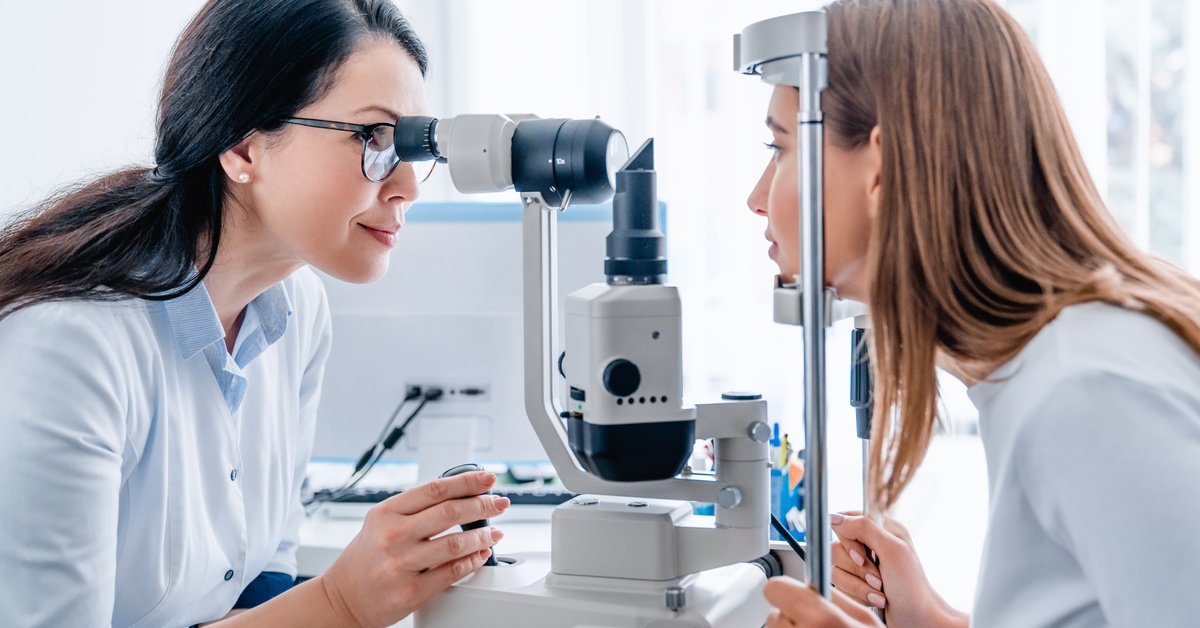
The Slit Lamp Biomicroscope stands as the absolute centerpiece and most frequently utilized eye test equipment in any ophthalmic examination suite, acting as the primary diagnostic window through which doctors inspect the intricate anatomy of the eye. Utilizing a specialized optical illumination system paired with a high-magnification stereoscopic microscope, this instrument projects an intensely bright, razor-thin slit of light into the ocular media, allowing the clinician to observe cross-sectional optical slices of the cornea, anterior chamber, iris, crystalline lens, and vitreous humor. Modern slit lamps are engineered with multi-coated Apochromatic lens systems that eliminate color fringing and optical distortion, giving clinicians the high-contrast visualization required to grade cataract density, detect subtle anterior chamber cell and flare, evaluate corneal dystrophies, and assess the fitting dynamics of specialty contact lenses.
Beyond its core function as an anterior segment inspection tool, a premium slit lamp acts as a multi-functional mounting station for several essential accessory devices that expand your practice’s diagnostic capabilities without taking up extra floor space. By attaching a Goldmann applanation tonometer to the central pivot tower, the slit lamp instantly transforms into a high-precision applanation station for measuring intraocular pressure, while adding a digital beam splitter allows clinicians to mount high-definition camera sensors for video recording, patient counseling, and teleophthalmology exports. Furthermore, when paired with handheld high-diopter fundus lenses (such as 78D or 90D lenses), the slit lamp provides a wide-field, three-dimensional stereoscopic view of the posterior pole, optic nerve head, and macula, making it an indispensable, versatile eye testing machine that anchors every clinical consultation lane.
2. Phoropter: The Core Vision Testing Machine for Refraction Lanes
While automated objective devices provide rapid initial estimates of refractive error, subjective refraction remains the definitive gold standard step for determining an accurate eyeglasses or contact lens prescription, and the Phoropter Refraction Suite serves as the ultimate vision testing machine for this precise task. Housing an extensive battery of spherical lenses, cylindrical lenses, rotary prisms, and cross-cylinders within a single ergonomic enclosure, the phoropter hangs directly in front of the patient’s eyes on a balanced counterweighted arm, allowing the optometrist or ophthalmologist to flip through hundreds of lens combinations with smooth mechanical precision or digital push-button ease. By completely eliminating the physical hassle of handling loose trial lenses, inserting them into heavy trial frames, and manually calculating axis angles, a phoropter streamlines the subjective testing workflow and creates a polished, highly professional experience for the patient.
Modern refraction suites are available in both classic tactile manual configurations and fully automated motorized digital formats, each delivering unique operational benefits depending on your clinical volume and budgetary goals. Manual phoropters are celebrated for their extreme mechanical durability, tactile feedback, and zero reliance on electronic power, making them virtually indestructible workhorses for standard examination lanes. Conversely, automated digital phoropters incorporate silent motorized lens drives, wireless tablet controllers, and direct integration with electronic medical record systems, enabling clinicians to import baseline autorefractor data instantly and switch between old and new prescriptions with a single click. Implementing an advanced phoropter system significantly cuts down total refraction time per patient, preventing waiting room bottlenecks and allowing high-volume eye care centers to increase their daily appointment capacity effortlessly.
3. Tonometer: Essential Eye Pressure Test Machine for Glaucoma Triage
Glaucoma is widely known as the silent thief of sight, progressing asymptomatically until significant irreversible optic nerve damage has occurred, which makes routine intraocular pressure (IOP) screening an absolute clinical mandate for every comprehensive eye examination. A specialized Tonometer is the dedicated eye pressure test machine engineered to measure intraocular fluid dynamics accurately, providing the critical diagnostic metric needed to diagnose ocular hypertension, monitor glaucoma progression, and evaluate the efficacy of pressure-lowering drops. Because corneal thickness, biomechanics, and patient anxiety can influence pressure readings, modern eye care facilities often equip their diagnostic bays with multiple tonometry modalities to handle diverse patient demographics ranging from cooperative adults to uncooperative children and post-surgical eyes.
The clinical spectrum of tonometry includes traditional applanation systems, automated non-contact air-puff units, and highly mobile rebound devices, each serving distinct roles within the clinical workflow. Goldmann applanation tonometers, which mount directly onto the slit lamp tower, remain the universally accepted clinical reference standard due to their mathematical precision, requiring topical anesthetic drops and fluorescein dye to flatten a fixed 3.06 mm area of the central cornea. Non-contact tonometers (NCT) utilize an automated, gentle pulse of compressed air to applanate the cornea, offering a completely non-invasive screening process that requires no anesthetic drops and eliminates corneal cross-contamination risk, making it perfect for rapid pre-examination triaging in busy waiting rooms. Meanwhile, portable rebound tonometers use microscopic disposable probes that momentarily touch the cornea without causing discomfort, offering a portable solution for taking accurate pressure measurements on bedridden, wheelchair-bound, or pediatric patients.
4. Retinoscope and Ophthalmoscope: Portable Handheld Eye Care Instruments
While heavy tabletop consoles and motorized refraction bays form the fixed infrastructure of an eye examination lane, compact handheld Streak Retinoscopes and Ophthalmoscopes provide the mobility, diagnostic agility, and point-of-care flexibility that every clinician needs. These handheld eye care instruments allow ophthalmologists, optometrists, and resident doctors to perform objective optical measurements and posterior segment evaluations anywhere within the medical facility—from dedicated consultation rooms and emergency triage bays to inpatient hospital wards and mobile community outreach camps. Built with ergonomic rubber grips, long-lasting rechargeable Lithium-ion handles, and bright LED or Xenon illumination systems, these compact diagnostic sets ensure that clinicians can gather crucial diagnostic data even when patients cannot be seated at a standard examination unit.
The streak retinoscope is an essential tool for objective refraction, projecting a well-defined beam of light into the patient’s pupil while the examiner observes the movement of the red reflex through a streak rotation. By placing trial lenses in front of the eye until the “with” or “against” reflex movement is neutralized, the practitioner calculates the precise spherical and cylindrical refractive error, making retinoscopy indispensable for non-verbal pediatric patients, infants, individuals with severe speech impediments, or patients with poor accommodation. Complementing the retinoscope, the direct ophthalmoscope offers an illuminated, highly magnified direct view of the fundus, allowing clinicians to inspect the optic disc for glaucomatous cupping, assess retinal blood vessels for hypertensive or diabetic microvascular changes, and identify retinal hemorrhages or papilledema during emergency bedside consultations.
5. Portable Autorefractometer & Retinal Camera: Automated Precision & Digital Imaging
As patient expectations continue to lean toward speed, comfort, and digital healthcare integration, modern practices are increasingly deploying automated, technology-driven devices that accelerate pre-screening and deliver high-definition digital documentation. Combining an automated objective refraction engine with digital posterior segment imaging via a Portable Autorefractometer elevates clinical precision while giving patients an engaging, modern diagnostic experience. These advanced digital systems bridge the gap between preliminary technician triaging and detailed physician evaluation, providing repeatable baseline data that cuts down overall examination time and strengthens clinical decision-making across all age groups.
A portable autorefractometer utilizes advanced optical wavefront sensing or infrared photo-refraction to capture accurate sphere, cylinder, and axis measurements in under three seconds per eye, operating from a non-contact distance of one meter that keeps young children and anxious patients completely at ease. Simultaneously, digital non-mydriatic fundus cameras capture wide-field, high-resolution color photographs of the retina, macula, and optic nerve without requiring uncomfortable pharmacological pupil dilation, allowing clinics to screen for diabetic retinopathy, age-related macular degeneration, and optic nerve damage during routine visits. Furthermore, the digital output from these advanced machines exports seamlessly via Wi-Fi or USB into central Electronic Health Record platforms, enabling longitudinal tracking of disease progression, supporting teleophthalmology consultations, and providing visual images that doctors can use to educate patients on their eye health.
Equipment Comparison Matrix
To assist hospital procurement committees, practice owners, and healthcare administrators in structuring their clinical lane layouts and budgeting capital effectively, the comparative matrix below outlines the primary functions, operational zones, and patient interaction profiles of these essential eye clinic equipments:
| Equipment Category | Primary Clinical Function | Target Department Zone | Patient Interaction Type |
| Slit Lamp Biomicroscope | Anterior/posterior segment magnification & inspection | Primary OPD Consultation Lane | Direct Contact / Close Proximity |
| Phoropter Suite | Subjective vision refraction & lens prescription | Refraction Lane / Optometry Bay | Non-Contact Proximity |
| Tonometer | Intraocular pressure (IOP) screening & monitoring | Glaucoma Bay / Pre-Screening | Contact / Air-Puff / Rebound |
| Retinoscope / Ophthalmoscope | Handheld objective refraction & fundus audit | Mobile / Bedside / Emergency OPD | Handheld Non-Contact |
| Portable Autorefractometer | Automated objective refraction & screening | Pre-Screening / Outreach Camps | Wireless Non-Contact |
Key B2B Procurement Factors for Hospital Directors
When evaluating the overall eye test machine price and allocating capital budgets across diagnostic product lines, hospital administrators and financial officers must evaluate long-term operational value rather than focusing solely on the upfront hardware cost. Purchasing low-cost, unbranded diagnostic devices from unauthorized importers often leads to frequent optical drift, unreliable calibration, lack of replacement components, and extended clinical downtime that harms your hospital’s reputation and daily revenue. A comprehensive procurement evaluation must balance initial capital expenditure with spatial room ergonomics, digital software compatibility, energy consumption, and the long-term reliability of the equipment under heavy daily OPD workloads.
Furthermore, analyzing an eye test machine price requires factoring in the availability of comprehensive post-warranty support, local spare parts depots, and Annual Maintenance Contracts (AMC) provided by the distributor. Selecting diagnostic instruments that feature open digital export formats (such as DICOM, USB, or Wi-Fi) ensures that your newly acquired diagnostic hardware integrates smoothly into your existing Hospital Information System (HIS) or Electronic Health Record software, eliminating manual data re-entry errors and speeding up administrative workflows. By investing in high-grade bio-optical engineering backed by a certified distributor, healthcare facilities ensure consistent diagnostic repeatability, protect their capital investments, and maintain a seamless workflow across all clinical lanes.
The Mediscience Advantage: Your Trusted Procurement Partner
Sourcing high-precision medical technology requires an experienced distribution partner with a proven track record of technical service, authentic product sourcing, and localised customer support. Mediscience Devices has served as Eastern and North-Eastern India’s premier authorised distributor of ophthalmic and optometry equipment for over 27 years, establishing a solid reputation among private clinics, corporate eye hospital chains, government medical institutions, and charitable healthcare trusts.
Headquartered in Kolkata, Mediscience Devices provides an end-to-end procurement experience that ensures your clinical facility operates at peak diagnostic capacity:
Authentic Factory-Direct Equipment: Authorized distribution of genuine products sourced directly from premier global manufacturing leaders, backed by official factory warranties.
Turnkey Delivery & Calibration: Factory-trained biomedical engineers manage doorstep delivery, physical installation, precision optical calibration, and thorough application training for your medical staff.
Uninterrupted SLA Support: Comprehensive localized spare parts inventories and rapid engineer dispatch guarantee zero clinical downtime for your OPD.
Contact the B2B Procurement Division at Mediscience Devices today to request an official quotation, inquire about complete clinic setup packages, and receive expert biomedical guidance to ensure your investment in eye clinic equipments delivers maximum clinical ROI.
People Also Ask
A basic eye consultation lane requires five core pieces of equipment: a slit lamp biomicroscope for ocular inspection, a phoropter or trial lens set with a vision chart for refraction, a tonometer for intraocular pressure screening, a retinoscope/ophthalmoscope set for handheld diagnostics, and an autorefractometer for rapid objective prescription estimates.
While a digital phoropter carries a higher initial CapEx, it accelerates subjective refraction times by up to 50%, syncs directly with auto refractometers and lensmeters, reduces operator fatigue, and automatically updates electronic medical records, delivering a high Return on Investment (ROI) in high-volume practices.
The eye test machine price depends on optical quality (such as Apochromatic multi-coated lenses), automation level (manual vs. motorized auto-tracking), software connectivity (DICOM/EHR integration), and the manufacturer's warranty and local service support infrastructure.
Non-contact (air-puff) tonometers do not touch the cornea or require topical anesthetic drops. This eliminates the risk of cross-contamination, removes the time needed for probe disinfection between patients, and allows paramedical staff to perform rapid glaucoma screening in waiting areas.
Healthcare institutions can procure certified, factory-warranted eye clinic equipments directly through authorized regional distributors like Mediscience Devices in Kolkata. Working with an established distributor ensures authentic pricing, professional installation, staff training, and rapid local technical support across Eastern and North-Eastern India.