Importer’s Guide: Choosing the Right Digital Fundus Camera for Eye Clinics in Bangladesh
The eye care delivery landscape across Bangladesh is undergoing a major structural expansion. Driven by rising public awareness of preventive eye health and an increasing prevalence of diabetic retinopathy, glaucoma, and age-related macular degeneration across urban centers like Dhaka, Chittagong, Sylhet, Khulna, and Rajshahi, healthcare institutions are facing an unprecedented demand for advanced posterior segment diagnostics. For hospital directors, clinical entrepreneurs, and institutional procurement heads, selecting the right digital fundus camera is one of the most strategic decisions when establishing, modernizing, or expanding an Outpatient Department (OPD).
Navigating the international B2B equipment market to source specialized ophthalmological instruments for Bangladeshi healthcare facilities involves a multi-faceted evaluation process. Beyond comparing optical physics and sensor specifications, hospital buyers must assess commercial feasibility, import tariffs, Letter of Credit (LC) banking requirements, and long-term after-sales service level agreements (SLAs).
Evaluating the overall fundus camera price in Bangladesh requires looking beyond the immediate invoice figure to analyze the Total Cost of Ownership (TCO). This includes factoring in freight logistics, customs clearance, regulatory compliance, warranty depth, and local engineering support to ensure maximum return on capital investment.
This comprehensive B2B importer’s guide breaks down the full spectrum of diagnostic imaging technologies, evaluates Mediscience Devices’ featured fundus camera portfolio, analyzes commercial investment tiers, outlines Bangladesh import logistics, and explains how partnering with an established regional supplier simplifies equipment procurement for healthcare providers.
Navigating the Retinal Imaging Landscape for Bangladesh Clinics
A fundus camera is an indispensable instrument of ophthalmology engineered to capture high-resolution digital photographs of the ocular interior, including the retina, optic nerve head, macula, and peripheral retinal vasculature. In Bangladesh’s high-volume clinical environment—where tertiary hospitals and district diagnostic centers often serve hundreds of patients daily—selecting the optimal imaging modality directly impacts clinical accuracy, diagnostic speed, and patient throughput.
Diagnostic fundus cameras fall into three primary hardware form factors, each serving distinct operational roles within the healthcare delivery chain:
Handheld and Portable Screening Cameras: Lightweight, battery-operated units designed for mobile screening camps, bedridden ward rounds, pediatric triage, and rural outreach programs across upazilas.
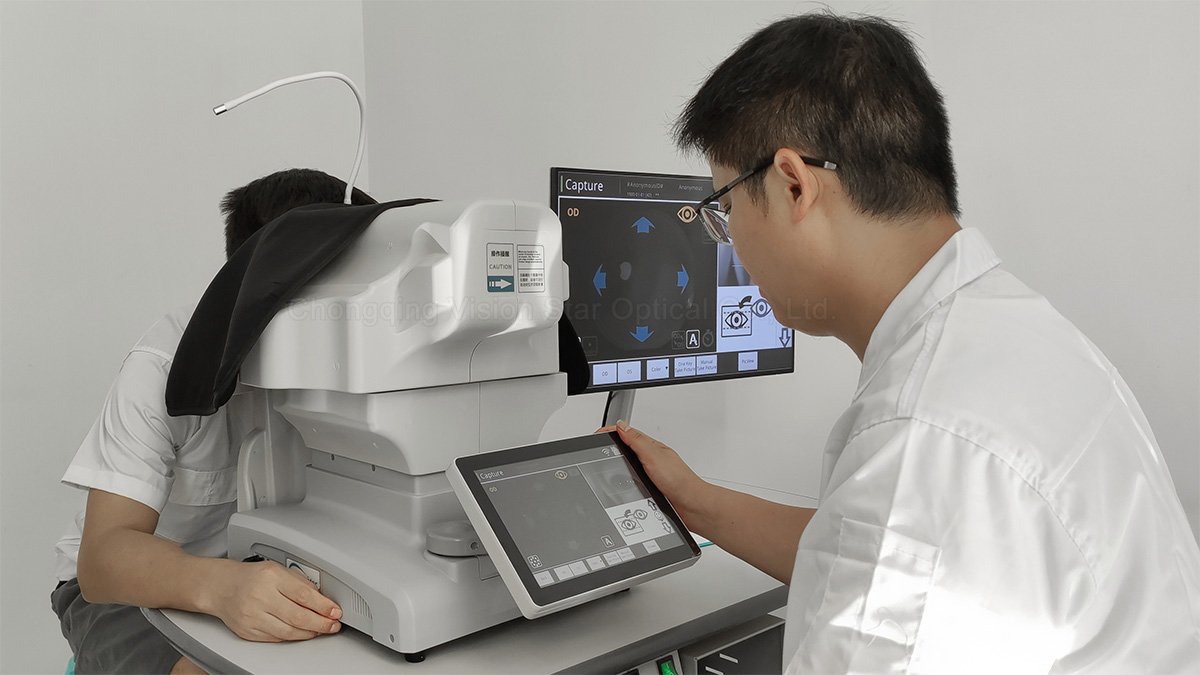
Desktop Non-Mydriatic Workstations: The core workhorse for high-volume consultation lanes in urban diagnostic centers and general ophthalmic OPDs.
Ultra-Widefield Scanning Laser Ophthalmoscopes (SLO): Flagship diagnostic workstations engineered for tertiary vitreoretinal institutes, medical college research departments, and advanced surgical centers.
Product Spotlight: Mediscience Devices’ Featured Fundus Camera Portfolio
Selecting the right device requires aligning clinical needs with the appropriate technology form factor. Mediscience Devices supplies a comprehensive selection of world-class fundus cameras tailored for every clinical tier:
A. Portable & Handheld Retinal Imaging Tier
1. Mocular Model CFC-X Digital Portable Fundus Camera
Clinical Focus: High-Mobility Non-Mydriatic Screening & Outreach
Key Features: Compact handheld design, high-resolution digital sensor, non-mydriatic operation, integrated LED illumination, and fast wireless data transfer.
Target Application in Bangladesh: Ideal for non-profit vision screening drives, community health outreach vans operating across rural divisions, bedside inpatient consultations, and pediatric screening lanes where traditional chinrest positioning is not feasible.
Clinical Focus: Precision Point-of-Care Diagnostics with Premium Optics
Key Features: Powered by legendary Volk double-aspheric glass optical components, lightweight ergonomic handgrip, true non-mydriatic performance, and direct USB/Wi-Fi EMR syncing.
Target Application in Bangladesh: Excellent for diabetic care clinics, mobile ophthalmology units, and multi-specialty hospital wards where clinicians require superior optical clarity in a portable device.
B. High-Throughput Desktop Non-Mydriatic Tier
Clinical Focus: High-Volume OPD Triage & Automated Diabetic Retinopathy Screening
Key Features: Compact tabletop footprint, non-mydriatic imaging capability, automated alignment prompts, low-power flash to maximize patient comfort, and intuitive image management software.
Target Application in Bangladesh: The preferred solution for busy diagnostic centers, private ophthalmology practices, and government hospital OPDs seeking an affordable, easy-to-operate desktop camera that accelerates patient processing.
C. Advanced Ultra-Widefield SLO Tier
4. Optos Daytona Ultra Widefield Fundus Camera
Clinical Focus: 200° Single-Scan Peripheral Pathology Mapping
Key Features: Proprietary Scanning Laser Ophthalmoscopy (SLO) technology, 200° field of view (covering ~82% of the retina in one 0.4-second scan), dual-laser depth layering (532 nm green / 633 nm red), non-mydriatic imaging through 2.0 mm pupils, and green autofluorescence (FAF).
Target Application in Bangladesh: Essential for high-volume tertiary eye care hospitals, diabetic eye institutes, and comprehensive retina OPDs looking to eliminate dilation bottlenecks while catching peripheral retinal tears, ischemia, and detachments early.
5. Optos California Ultra Widefield Fundus Camera
Clinical Focus: Tertiary Vitreoretinal Surgery & Ultra-Widefield Angiography
Key Features: The flagship surgical-grade platform from Optos. Combines 200° ultra-widefield imaging with multi-modal capability, including ultra-widefield Fluorescein Angiography (FA) and Indocyanine Green Angiography (ICG).
Target Application in Bangladesh: The ultimate diagnostic asset for medical college teaching hospitals, specialized vitreoretinal surgical suites, and ocular oncology centers requiring dynamic peripheral vascular angiography.
Commercial Investment Tiers & Total Cost of Ownership (TCO)
When procurement committees evaluate the commercial landscape for digital imaging equipment, understanding the broader financial factors that shape the market is essential for effective capital allocation. Rather than focusing solely on upfront hardware quotes, institutional buyers evaluate the long-term commercial viability, revenue potential, and operational expenditure associated with each equipment category.
Commercial Equipment Investment Profiles
Portable & Handheld Screening Tiers: Evaluating the handheld fundus camera price dynamics reveals an entry-level capital expenditure profile. Units like the Mocular CFC-X and Volk Fundus Camera provide a cost-effective gateway for NGOs, charitable trusts, and community health centers seeking to establish mobile vision screening programs without committing massive capital. The lower overall portable fundus camera price structure allows organizations to deploy multiple screening units across various regional branches simultaneously.
Mid-Tier Automated Desktop Workstations: The standard desktop retinal camera price reflects a mid-level capital investment suited for established private eye practices, multi-specialty hospitals, and urban diagnostic centers. Systems like the 3nethra Fundus Camera feature motorized chinrests, automated eye tracking, and built-in image management software. Their high patient throughput and reliability make them a dependable asset for generating consistent daily consultation revenue.
Premium Multi-Modal & Ultra-Widefield Suites: At the upper end of the investment spectrum, the fundus camera cost for ultra-widefield systems like the Optos Daytona and Optos California represents a significant capital expenditure. Reserved primarily for tertiary vitreoretinal centers, these advanced systems generate high diagnostic returns by enabling specialized fluorescein angiography (FA), autofluorescence (FAF), and 200° peripheral pathology grading that attracts specialized patient referrals.
Key Commercial Factors Influencing Equipment Investment
Sensor & Optical Physics: High-grade double-aspheric glass lenses paired with high-definition digital sensors increase initial manufacturing costs but deliver superior optical clarity, reducing false negatives and re-scan rates.
Software Automation & AI Integration: Systems featuring automated 3D tracking, small-pupil capture modes, and AI-assisted screening modules carry higher software licensing values but drastically reduce technician operating time.
Customs Duties & Import Regulatory Costs: Importing medical hardware into Bangladesh involves National Board of Revenue (NBR) import tariffs, Advance Income Tax (AIT), Value Added Tax (VAT), and port processing charges that must be calculated into the overall acquisition cost.
Long-Term Service Level Agreements (SLAs): A competitive upfront fundus camera price can quickly lose its financial advantage if post-warranty replacement parts or specialized optical sensors must be air-freighted from distant continents during an operational breakdown. Securing guaranteed local technical service protects your daily OPD revenue stream.
Master B2B Product Comparison Matrix
To assist procurement committees, hospital boards, and clinical directors in selecting the right ophthalmological instruments for their institutional requirements, the table below compares key operational, commercial, and technical parameters across Mediscience’s portfolio:
| Model Name | Hardware Form Factor | Field of View (FOV) | Primary Clinical Setting | Key Advantage | Relative CapEx Tier |
| Mocular CFC-X | Handheld / Portable | Non-Mydriatic Standard | Mobile Camps, Rural Upazilas, Wards | Ultra-portable, fast wireless sync | Economical Entry-Point |
| Volk Fundus Camera | Ergonomic Handheld | Non-Mydriatic Precision | Point-of-Care, Diabetic Care Units | Legendary Volk double-aspheric optics | Accessible Professional Tier |
| 3nethra Classic/Smart | Desktop Workstation | 45° Non-Mydriatic | OPD Triage, Diagnostic Centers | Rapid automated non-mydriatic workflow | Balanced Mid-Range CapEx |
| Optos Daytona | Desktop Console (SLO) | 200° Single Capture | High-Volume Hospitals, Retina OPDs | 200° UWF, dual-laser depth layers | Premium Institutional CapEx |
| Optos California | Flagship Surgical Console | 200° Single Capture | Tertiary Vitreoretinal OT / Institutes | UWF Fluorescein & ICG Angiography | Flagship Surgical CapEx |
Import Logistics, Regulatory Compliance, and Regional Sourcing
Importing high-precision medical technology into Bangladesh requires navigating specific regulatory and banking workflows established by the Government of Bangladesh, the Directorate General of Drug Administration (DGDA), and Bangladesh Bank.
Essential Steps for Importing Medical Equipment into Bangladesh:
DGDA Import Clearance & Registration: Medical diagnostic hardware imported into Bangladesh must comply with DGDA safety standards. Importers must ensure the equipment holds valid international quality certifications (such as US FDA, CE, or ISO 13485) to receive smooth import permission and No Objection Certificates (NOC).
Letter of Credit (LC) Execution: Foreign currency transactions require opening a commercial Letter of Credit through authorized dealer banks in Bangladesh under guidelines set by Bangladesh Bank. Having clear, transparent Proforma Invoices (PI) with precise HS Code classifications prevents banking delays.
Port Customs Clearance: Equipment arriving via Hazrat Shahjalal International Airport (HSIA) in Dhaka or land ports like Benapole/Petrapole requires systematic customs documentation, assessment of NBR tariff schedules, and physical inspection to ensure zero demurrage charges.
Sourcing via Regional Hubs vs. Distant Global OEMs
When healthcare institutions import complex optical and ophthalmological instruments directly from distant manufacturers in Western Europe or North America, they often encounter operational friction:
Extended Transit Lead Times: Sea or air freight from distant continents can take anywhere from 6 to 12 weeks, delaying clinic opening dates and tying up capital.
Complex Banking & LC Formalities: Opening high-value foreign currency LCs with overseas suppliers often involves lengthy approval cycles and currency conversion overheads.
Geographic Proximity & Rapid Delivery: Located in Kolkata, Mediscience provides rapid road or air dispatch to Bangladesh via Benapole/Petrapole or Dhaka (HSIA), reducing transit timelines from months down to a few days.
Direct Manufacturer Authorization: Authorized distributor for premier global brands (including Rexxam, Optos, Suoer, Labomed, Fujitron, and MediWorks), ensuring 100% authentic hardware with official factory warranties.
Localized Technical & Calibration Support: Our factory-trained biomedical engineers can travel directly to Bangladesh for on-site installation, optical calibration, DICOM network setup, and comprehensive staff application training.
Turnkey Equipment Portfolio: In addition to diagnostic imaging, Mediscience supplies a full catalog of OPD and OT equipment—from autorefractors and tonometers to advanced surgical microscope ophthalmology suites—allowing Bangladeshi buyers to consolidate their procurement under a single trusted regional vendor.
Service Delays During Technical Breakdowns: If an optical sensor drifts or a circuit board fails, waiting for an international field engineer to travel to Dhaka or Chittagong can result in weeks of OPD downtime.
The Mediscience Regional Supply Advantage
Sourcing through Mediscience Devices—Eastern India’s premier authorized medical equipment distributor headquartered in Kolkata—provides Bangladeshi hospitals and medical importers with a streamlined regional supply route:
Key Procurement Checklist for Importers in Bangladesh
Before issuing a Purchase Order (PO) or opening an LC for new fundus imaging equipment, hospital procurement committees should review this operational checklist:
[ ] Small Pupil Performance: Is the device certified to capture clear non-mydriatic images through small un-dilated pupils ($\le 3.0\text{ mm}$ or $\le 2.0\text{ mm}$ for Optos), ensuring reliable screening for diabetic and elderly patients?
[ ] Software Compatibility & DICOM Output: Does the imaging software support open export formats (DICOM 3.0, PDF, JPEG) to connect with your Hospital Information System (HIS) or tele-ophthalmology platform?
[ ] Power Input & Voltage Stabilization: Is the hardware configured for 220V/50Hz electrical supply with internal voltage stabilization to withstand local power fluctuations?
[ ] Local Warranty & AMC Coverage: Does the contract outline clear terms for warranty duration, preventive maintenance schedules, and guaranteed response times for spare part replacement?
Conclusion: Partner with Mediscience Devices for Your Equipment Sourcing
Upgrading your clinic’s diagnostic infrastructure with a high-precision digital fundus camera is an investment in clinical accuracy, operational efficiency, and long-term patient trust. Whether your institution requires an economical handheld screening camera like the Mocular CFC-X, an optical precision tool like the Volk Fundus Camera, a high-volume desktop workstation like the 3nethra, or ultra-widefield powerhouses like the Optos Daytona and Optos California, Mediscience Devices provides authentic technology, transparent export terms, and dependable regional service support.
Streamline your medical equipment procurement with Eastern India’s most trusted distributor.
Contact the Export & B2B Procurement Division at Mediscience Devices today to request an official proforma invoice, inquire about B2B institutional procurement terms for Bangladesh, and receive expert guidance on selecting the ideal fundus camera for your practice.
People Also Ask
Evaluating the fundus camera price in Bangladesh involves looking at several key factors: optical sensor resolution, automated 3D tracking features, non-mydriatic small pupil capabilities, ultra-widefield laser optics, software AI integration, import tariffs (NBR duties/AIT), and the inclusion of local technical service agreements (AMCs).
While handheld units like the Mocular CFC-X offer great flexibility for mobile camps, bedside visits, and pediatric wards, a stationary desktop camera (like the 3nethra) or an ultra-widefield system (like the Optos Daytona) is generally preferred for high-volume hospital OPDs due to automated tracking, chinrest stability, and faster hands-free workflow.
The total fundus camera cost includes the base equipment cost plus customs duties, Advance Income Tax (AIT), VAT, and port clearing fees assessed by customs authorities in Bangladesh. Partnering with a regional distributor like Mediscience helps ensure accurate HS code classification, transparent proforma invoicing, and smooth customs clearance.
Yes. Mediscience Devices regularly assists healthcare institutions and medical equipment importers across Bangladesh. Our factory-trained biomedical engineers provide on-site installation, optical calibration, system network integration, and clinical application training for your medical staff.
The Optos Daytona is ideal for high-volume non-mydriatic screening, general retina OPDs, and routine 200° ultra-widefield structural diagnostics. The Optos California adds ultra-widefield Fluorescein Angiography (FA) and Indocyanine Green Angiography (ICG), making it the preferred choice for tertiary vitreoretinal surgical centers and teaching institutes.