The 900% Surge: Why a Portable Fundus Camera is the New Standard for Indian Eye Clinics
The ophthalmic healthcare landscape in India is experiencing an unprecedented transformation, driven by an urgent need for diagnostic decentralization. According to recent market search data, the interest in procuring a portable fundus camera has seen a staggering 900% Year-over-Year (YoY) growth. This isn’t a fleeting trend; it’s a clinical paradigm shift. As a trusted medical equipment supplier in India for over 27 years, Mediscience Devices has witnessed firsthand this rapid transition from stationary, hospital-bound diagnostics to highly agile, mobile clinical setups.
But what is driving this explosive demand? Why are both solitary practitioners and large hospital chains scrambling to integrate these handheld marvels into their daily workflows? In this in-depth analysis, we will explore the clinical logic behind the miniaturization of ophthalmic equipment, the undeniable advantages of untethering your diagnostics, and how integrating a device like the Mocular Model CFC-X can radically optimize your practice.
The End of the Waiting Room Bottleneck: Clinical Advantages of Miniaturization
Historically, a fundus camera was synonymous with a massive, heavy footprint. It dictated the flow of the clinic. Patients had to be moved into a specific “imaging room,” positioned precisely behind a chin rest, and often subjected to pharmacological dilation, which resulted in hours of post-exam blurred vision. This traditional workflow created severe bottlenecks, particularly in high-volume clinics.
The advent of clinical-grade portability obliterates this bottleneck. Here is how:
1. The Non-Mydriatic Revolution
Modern mobile units are fundamentally changing patient throughput because the vast majority are non-mydriatic. For instance, the Mocular CFC-X can capture a high-definition image through a minimum pupil diameter of just 2.5mm. By eliminating the 30-to-40-minute waiting period required for dilation drops to take effect, clinics can drastically increase their daily patient capacity without sacrificing the quality of the diabetic retinopathy or glaucoma screening.
2. Ergonomics and Patient Comfort
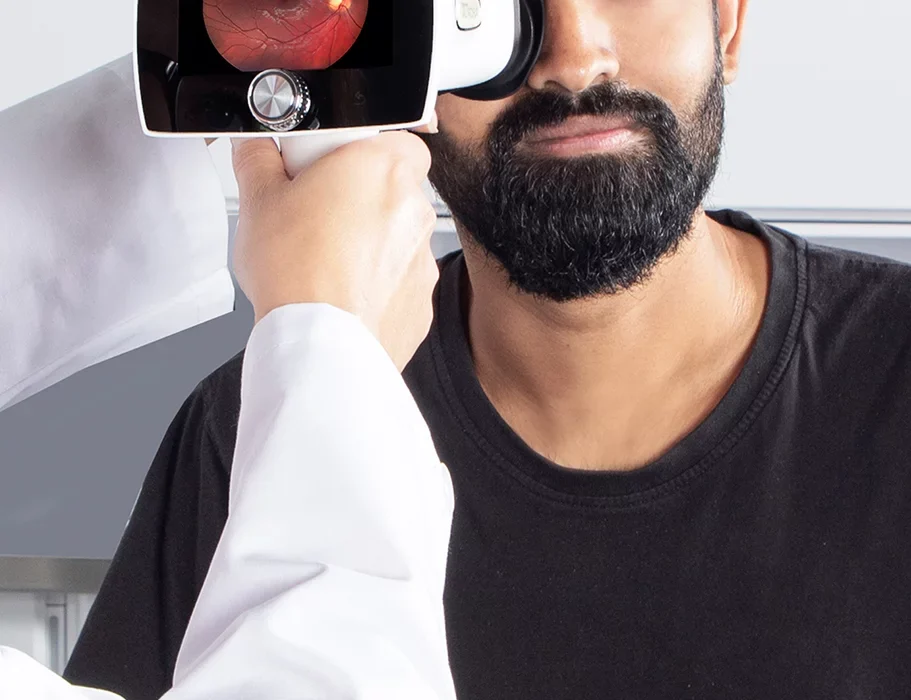
The ability to bring the diagnostic tool directly to the patient cannot be overstated. A handheld device weighing less than 600 grams allows ophthalmologists and optometrists to examine patients who are physically unable to sit at a traditional slit lamp table. This includes pediatric patients who cannot stay still, elderly patients with spinal mobility issues, and bedridden patients in hospital wards. The camera adapts to the patient, rather than forcing the patient to adapt to the machine.
3. Dynamic Workflows and Space Optimization
Real estate in urban Indian clinics is expensive. Dedicating an entire room to a tabletop fundus camera is a significant overhead. Portable cameras free up this clinical real estate. Because devices like the Mocular CFC-X are battery-operated (with operation times exceeding 5 hours) and completely wireless, the examination can take place in the consultation room, the pre-test area, or even the waiting room triage station.
The Teleophthalmology and Community Outreach Boom
The 900% surge in demand is deeply tied to the rise of teleophthalmology and mobile eye camps. India faces a massive disparity in healthcare distribution; while urban centers have world-class facilities, rural areas often lack basic eye care. The government and various NGOs (such as Lions and Rotary Clubs) rely heavily on community outreach programs to combat preventable blindness caused by diabetic retinopathy and cataracts.
A portable fundus camera is the absolute cornerstone of these outreach initiatives. Armed with a 12-megapixel full HD camera, a clinician in a remote village in Assam or Nagaland can capture a detailed 50° Field of View (FOV) image of the retina. Thanks to built-in Wi-Fi, 4G, and Bluetooth capabilities, these images are instantly transmitted back to a retinal specialist at a major hospital in Kolkata for immediate diagnosis. This hub-and-spoke model of care is only possible because of the specific technological leaps in mobile ophthalmic equipment.
“At Mediscience Devices, we don’t just sell equipment; we enable reach. By supplying cutting-edge portable solutions across Eastern and North-Eastern India, we empower clinicians to bring the hospital directly to the patient’s doorstep.”
Deep Dive: The Mocular CFC-X Digital Portable Fundus Camera
To truly understand the value of this trend, we must look at the specifications of the devices leading the charge. The Mocular Model CFC-X, proudly supplied by Mediscience Devices, represents the pinnacle of current mobile imaging tech.
- Uncompromising Resolution: The device features a 12-megapixel sensor, ensuring that the microaneurysms indicative of early-stage diabetic retinopathy are crisply captured.
- Intelligent Auto-Focus & Fixation: Utilizing artificial star point guidance technology, the device auto-focuses to cover a comprehensive field of view, drastically reducing the learning curve for technicians and ensuring consistent, high-quality images regardless of the operator’s experience level.
- Integrated AI Support: The latest models are backed by AI technology that provides an average diagnostic report on the spot, acting as a crucial second opinion for the clinician.
- High-Definition Interface: The 4.7-inch multi-touch anti-glare screen allows the doctor to review the fundus image immediately with the patient, serving as an incredibly powerful tool for patient education and treatment compliance.
Choosing the Right Medical Equipment Supplier in India
The decision to upgrade your ophthalmic equipment is significant. However, buying a highly sophisticated piece of diagnostic technology from a generic, unverified vendor is a recipe for clinical disaster. The machinery is delicate, and its calibration directly impacts your diagnostic accuracy.
When searching for a medical equipment supplier in India, clinicians must prioritize post-sale infrastructure. This is where Mediscience Devices has cemented its legacy over the last 27 years. Headquartered in Kolkata with a massive network across Chhattisgarh, West Bengal, Jharkhand, and the Northeast, Mediscience is not a mere distributor; we are a comprehensive service partner.
Procuring a camera like the Mocular CFC-X or even an Optos Daytona Ultra-Widefield Fundus Camera through Mediscience guarantees:
- Expert Installation: Free doorstep installation by factory-trained engineers.
- Clinical Training: We ensure your staff understands the nuances of the equipment, from auto-focus features to DICOM server integration.
- Unwavering Warranty Support: A standard one-year warranty backed by rapid-response technical teams, ensuring your clinic experiences zero unnecessary downtime.
The Financial Imperative: ROI of Mobile Diagnostics
Beyond the clinical benefits, the shift toward mobile diagnostics makes undeniable financial sense. The initial capital expenditure for a high-quality portable fundus camera is significantly lower than that of a traditional tabletop model. Furthermore, because it is non-mydriatic and highly efficient, clinics can process more patients per hour. This increased throughput translates directly to higher daily revenue.
Additionally, the ability to perform high-grade retinal screenings during routine optometric check-ups allows clinics to bill for specialized diagnostic codes more frequently. It transforms a standard refraction appointment into a comprehensive ocular health evaluation, instantly elevating the clinic’s perceived value in the eyes of the patient.
Conclusion: Don't Get Left Behind
The 900% growth in search volume is a glaring indicator that the market is adapting rapidly. Patients expect faster, more comfortable, and highly accurate diagnoses. The portable fundus camera is no longer a luxury item or a niche tool for rural camps; it is a foundational piece of modern ophthalmic equipment required for any competitive eye clinic.
By partnering with a seasoned medical equipment supplier in India like Mediscience Devices, you ensure that your practice is not only keeping up with this technological surge but leading it. It is time to untether your practice, expand your reach, and redefine your standard of care.
To explore our full range of diagnostic imaging solutions, contact the experts at Mediscience Devices today.
Check Mediscience Devices' product catalogue. Connect with Mediscience Devices today.
Frequently Asked Questions (FAQ)
A tabletop fundus camera is a large, stationary device that often requires the patient's pupils to be dilated and provides highly detailed images for complex surgeries. A portable fundus camera is handheld, battery-operated, and typically non-mydriatic (no dilation needed), making it ideal for rapid screenings, bedridden patients, and mobile eye camps, while still offering excellent clinical resolution.
The 900% YoY growth is fueled by the need for decentralized healthcare, the expansion of teleophthalmology, and the increasing frequency of rural community eye screening camps. Portable cameras allow specialists to capture clinical-grade retinal images anywhere, transmitting them instantly via Wi-Fi or 4G for remote diagnosis.
No. The Mocular CFC-X is a non-mydriatic camera. It can successfully capture high-definition, 50-degree field-of-view images of the retina through a minimum pupil diameter of just 2.5mm, significantly saving time and improving patient comfort.
With over 27 years of industry experience, Mediscience Devices is a premier medical equipment supplier in India. Based in Kolkata, they provide top-tier ophthalmic equipment, including portable fundus cameras, alongside comprehensive installation, training, and maintenance services across Eastern and North-Eastern India.
Absolutely. Devices like the Mocular CFC-X are designed specifically for teleophthalmology. They feature built-in Wi-Fi, Bluetooth, and 4G connectivity, allowing technicians in remote locations to instantly share high-resolution retinal images with senior ophthalmologists in urban hospitals for immediate consultation.