The Essential Ophthalmic Equipment Checklist: Upgrading Your Facility for Maximum Precision
Setting up a new eye hospital or upgrading an existing clinical facility is a high-stakes endeavor. In modern ophthalmology, the margin for error is microscopic, and clinical outcomes are inextricably linked to the quality of your diagnostic and surgical infrastructure. As the industry rapidly shifts toward data-driven, objective diagnostics, relying on outdated legacy systems is no longer viable.
For hospital administrators, procurement heads, and lead surgeons, the challenge lies not just in selecting individual machines, but in creating a cohesive, highly efficient ecosystem. In this masterclass guide, we will break down the essential ophthalmic equipment required to future-proof your practice while navigating the complex landscape of medical equipment companies in India.
Drawing on over 27 years of industry dominance as a premier medical equipment supplier in India, Mediscience Devices provides this authoritative checklist to ensure your facility achieves maximum precision, patient throughput, and clinical ROI.
But what is driving this explosive demand? Why are both solitary practitioners and large hospital chains scrambling to integrate these handheld marvels into their daily workflows? In this in-depth analysis, we will explore the clinical logic behind the miniaturization of ophthalmic equipment, the undeniable advantages of untethering your diagnostics, and how integrating a device like the Mocular Model CFC-X can radically optimize your practice.
Navigating the Procurement Maze: Choosing Your Supply Partner
Before examining specific instruments, we must address the foundation of procurement. The Indian healthcare market is flooded with vendors, but true medical equipment companies in India offer far more than just a transaction. Sourcing highly sensitive eye hospital equipment requires a partner who understands the clinical workflow.
When investing capital into your facility, your procurement strategy should demand:
- Multi-Brand Versatility: The ability to source premium Japanese, German, and Swiss optics under one roof.
- Calibration and Installation: Factory-trained engineers who perform meticulous on-site calibration. A misaligned topographer or slit lamp can skew critical presurgical data.
- Rapid After-Sales Service: Uptime is revenue. Your supplier must offer comprehensive, rapid-response warranties to ensure zero unnecessary downtime in your OPD or surgical theater.
Mediscience Devices has spent nearly three decades perfecting this holistic service model across Eastern and North-Eastern India.
The Outpatient Department (OPD): The Frontline of Ocular Diagnostics
The OPD is the engine of your hospital. The goal here is rapid, highly accurate data acquisition. Investing in top-tier optometry instruments reduces patient chair time and provides the surgeon with a flawless baseline.
Automated Refraction: The Foundation of the Exam
The auto refractometer is arguably the most utilized piece of ophthalmic equipment in any clinic. The transition from manual, subjective refraction to automated systems has revolutionized patient screening.
Modern clinics require fast, objective measurements of refractive error and corneal curvature. For high-volume setups, you need devices that minimize spherical aberrations and account for patient accommodation.
- Top-Tier Options: The Visionix ARK with Auto FOG (VX 90) offers an intelligent auto-fogging system and a 7-inch TFT color touch screen, ensuring extreme accuracy while preventing accommodative spasms.
- Japanese Precision: Alternatively, the REXXAM (formerly Shinnippon) R-800 & K-900 series delivers legendary Japanese reliability, making it one of the most trusted autorefractometers for consistent, repeatable baseline measurements.
Biomicroscopy: Anterior Segment Clarity
A comprehensive anterior segment evaluation requires a slit lamp with superior optics. You are looking for high light transmission, apochromatic lenses to eliminate chromatic aberration, and a deep depth of field to accurately assess the corneal endothelium, anterior chamber depth, and lens opacities.
- Recommended Setups: The FUJITRON Haggstreit Type Slit Lamp (FSL-355H-SOS) provides converging optics and a five-position revolving drum for seamless magnification changes. For premium clinics, multi-coated Swiss-grade optics ensure a bright, sharp image without flare or ghosting, which is critical when identifying subtle signs of uveitis or micro-corneal defects.
Ergonomics and Patient Flow: The Ophthalmic Unit
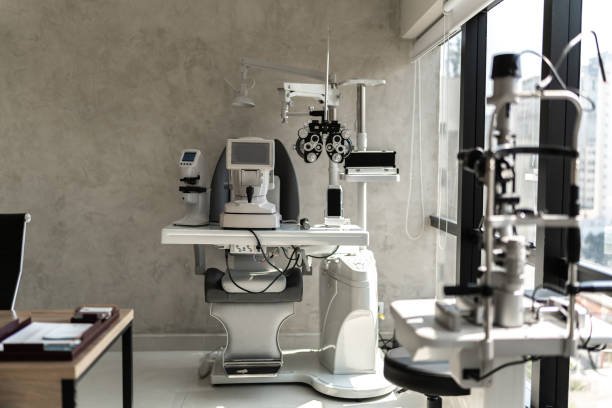
The physical infrastructure of the examination room dictates workflow speed. A motorized refraction unit consolidates the slit lamp, auto refractometer, and phoropter into one seamless station.
- Facility Essentials: The Medivision Ophthalmic Chair Unit (MOU-2000) provides a sturdy, ergonomic base for the patient and clinician, allowing swift transitions between instruments without requiring the patient to move.
The Surgical Theater: Mastering the Microscopic Realm
While the OPD focuses on diagnosis, the surgical theater demands absolute, uncompromising execution. In procedures like phacoemulsification (cataract surgery) or pars plana vitrectomy, the surgeon’s hands are guided entirely by the quality of their optics.
The Non-Negotiable Need for a Premium Ophthalmic Microscope
An ophthalmic microscope must provide brilliant red-reflex illumination, extreme stereoscopic depth, and apochromatic correction. A subpar microscope leads to surgeon fatigue and increases the risk of capsular tears or incomplete cortical cleanup.
When outfitting your surgical suite, consider these industry-leading models supplied by Mediscience:
- High-End Advanced Surgery: The TAKAGI OM-19 (Japan) represents the pinnacle of surgical visualization. With high-definition (1280×720) resolution, cold LED illumination, and independent motorized focusing, it allows surgeons to operate with unprecedented clarity on the posterior capsule.
- Reliable Workhorses: The KARL KAPS SOM-62 (Germany) is an optimal choice for outpatient surgical centers and cataract suites, offering robust German engineering.
- Apochromatic Excellence: The LABOMED PRIMA-MU-OPH utilizes an apochromatic optical system with single-axis motorized focusing and red-reflex enhancement, essential for visualizing an illuminated retina during dense cataract extractions.
Advanced Diagnostic Additions to Complete Your Arsenal
To elevate your hospital from a standard clinic to a comprehensive eye care center, you must integrate specialized diagnostic imaging:
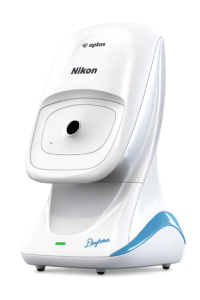
- Ultra-Widefield Imaging: Integrate an Optos Daytona Ultra-Widefield Fundus Camera to capture 200° of the retina in a single shot without dilation, crucial for modern diabetic retinopathy screening.
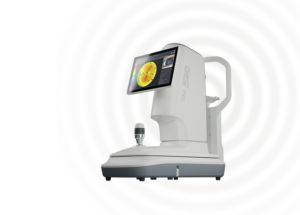
- Ocular Surface Analytics: Equip your dry eye clinic with the Dry Eye Analyzer DEA 520 (MediWorks) to objectively quantify tear film breakdown and meibomian gland dysfunction.
Conclusion: The ROI of Single-Source Procurement
Upgrading your facility is not merely an expense; it is a calculated investment in patient outcomes and practice reputation. Procuring your entire suite—from a basic trial lens set to an advanced ophthalmic microscope—from a single, dominant medical equipment supplier in India streamlines your operations.
Mediscience Devices eliminates the friction of dealing with multiple vendors. With 27 years of expertise, we ensure that your eye hospital equipment is flawlessly installed, rigorously calibrated, and continuously supported. By investing in the right infrastructure today, you empower your surgeons, optimize your patient flow, and secure the clinical future of your hospital.
Ready to modernize your clinic? Contact Mediscience Devices today to consult with our facility planning experts.
By partnering with a seasoned medical equipment supplier in India like Mediscience Devices, you ensure that your practice is not only keeping up with this technological surge but leading it. It is time to untether your practice, expand your reach, and redefine your standard of care.
To explore our full range of diagnostic imaging solutions, contact the experts at Mediscience Devices today.
Frequently Asked Questions (FAQ)
When selecting an auto refractometer, prioritize accuracy, speed, and patient comfort. Look for features like auto-fogging technology (which prevents the patient's eye from accommodating and altering the reading) and retro-illumination to detect early cataracts. High-quality models like the Visionix ARK or REXXAM R-800 ensure highly repeatable baseline prescriptions.
An apochromatic lens system in an ophthalmic microscope corrects for chromatic and spherical aberrations, meaning all wavelengths of light are brought into focus at the same point. This results in a much sharper, high-contrast image with a better depth of field, which is critical for safety during delicate procedures like cataract or retinal surgery.
The best medical equipment companies in India offer more than just sales. You should look for a supplier with a long-standing industry reputation (such as Mediscience Devices' 27-year history). They must provide multi-brand options, authorized installation by factory-trained engineers, and rapid on-site service warranties to prevent clinical downtime.
A baseline Outpatient Department (OPD) requires an auto refractometer (or auto ref-keratometer), a high-quality slit lamp (biomicroscope) for anterior segment exams, an applanation tonometer for checking intraocular pressure (IOP), a digital visual acuity chart, and a motorized ophthalmic chair unit to streamline patient flow.
Mediscience Devices is a premier importer and authorized supplier of high-end surgical ophthalmic equipment, including Japanese Takagi (OM-19, OM-6) and German Karl Kaps (SOM-62) microscopes. They service hospitals and clinics extensively across Eastern and North-Eastern India.