Navigating the Fundus Camera Price in India: A Comprehensive Buyer’s Guide
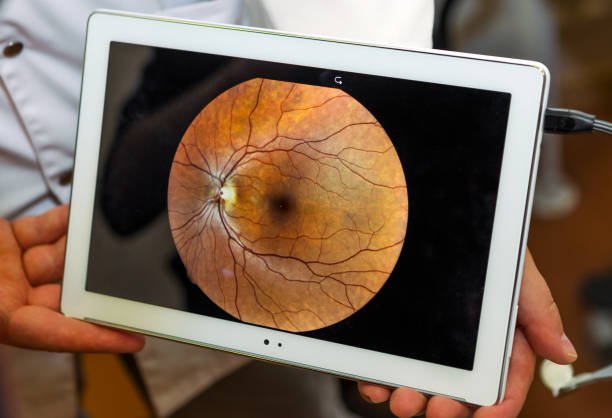
For any modern ophthalmic clinic or eye hospital, the ability to accurately image the retina is non-negotiable. Whether you are screening for diabetic retinopathy, managing glaucoma, or detecting age-related macular degeneration (AMD), a high-quality fundus camera is the cornerstone of posterior segment diagnostics.
However, when clinical directors and procurement heads begin researching the market, the primary question that arises is: What is a justifiable fundus camera price?
The Indian market is flooded with options ranging from budget-friendly imports to premium European and Japanese optical giants. Understanding the factors that dictate the price of an ophthalmic fundus camera—and matching those features to your clinic’s actual workflow—is the key to securing a high Return on Investment (ROI). Drawing on 27 years of experience as a leading medical equipment supplier, Mediscience Devices provides this definitive guide to making an informed procurement decision.
The Three Tiers of Fundus Cameras and Their Pricing Factors
The fundus camera price is not arbitrary; it is directly tied to the technology, the Field of View (FOV), and the mobility of the unit. Here is how the market is generally segmented:
1. The Standard Tabletop Fundus Camera
Traditionally, the eye fundus camera has been a heavy, stationary piece of equipment. These models are the workhorses of large eye hospitals.
Clinical Features: They typically offer a 45° to 50° FOV. High-end models feature multi-modality imaging, including Color, Red-Free, Fluorescein Angiography (FFA), and Indocyanine Green (ICG) angiography.
Price Drivers: The cost increases significantly based on the optical quality, the resolution of the integrated sensor, and the inclusion of advanced angiography modules.
Best For: High-volume retinal specialty clinics and major surgical hospitals that require complex vascular imaging.
2. The Portable Fundus Camera (The 900% Growth Trend)
There has been a massive paradigm shift in the industry, evidenced by a staggering 900% Year-over-Year growth in search demand for the portable fundus camera.
Clinical Features: Devices like the Mocular CFC-X Digital Portable Fundus Camera have revolutionized retinal screening. They are lightweight, battery-operated, and inherently non-mydriatic (capable of imaging through pupils as small as 2.5mm without dilation drops).
Price Drivers: The fundus camera price for portable units is generally lower than complex tabletop systems, making them highly accessible. Their value is driven by their high-definition sensors (up to 12MP), auto-focus algorithms, and wireless integration (Wi-Fi/Bluetooth) for instant teleophthalmology.
Best For: Individual practitioners, multi-branch OPDs, pediatric ophthalmology, and rural eye camp screening programs.
3. The Ultra Wide Field Fundus Camera
This represents the absolute pinnacle of retinal imaging technology.
Clinical Features: An ultra wide field fundus camera, such as the Optos Daytona, utilizes proprietary scanning laser technology to capture an astonishing 200° view of the retina—covering approximately 82% of the retina in a single, un-dilated, sub-second capture.
Price Drivers: These are premium, high-capital-expenditure devices. The price reflects the unparalleled ability to detect peripheral retinal tears, detachments, and diabetic lesions that standard 45° cameras physically cannot see.
Best For: Premium eye institutes, advanced retina specialists, and clinics prioritizing maximum diagnostic safety and cutting-edge patient education.
Hidden Costs: What to Look for Beyond the Sticker Price
When evaluating a quote from an equipment vendor, the base fundus camera price is only part of the equation. To calculate the True Cost of Ownership, hospital administrators must factor in the following:
Software and DICOM Licensing: Does the quoted price include the image management software? Is the software DICOM-compatible for seamless integration with your Hospital Management System (HMS)? Some vendors charge hefty annual licensing fees.
Installation and Calibration: Transporting and installing sensitive optical equipment requires factory-trained engineers. Ensure doorstep installation is included.
After-Sales Service and Warranty: A cheaper camera from an unverified vendor becomes a massive liability if it breaks down and replacement parts take months to arrive.
The Mediscience Procurement Advantage
When you partner with a 27-year industry veteran like Mediscience Devices, you aren’t just paying for an ophthalmic fundus camera; you are investing in operational security.
Serving Eastern and North-Eastern India, Mediscience provides transparent pricing and comprehensive packages. Whether you are outfitting a mobile clinic with the latest portable fundus camera or upgrading your flagship hospital with an ultra wide field fundus camera, we guarantee expert installation, rigorous staff training, and rapid on-site service support.
Investing in the right diagnostic technology pays for itself through increased patient throughput, precise diagnoses, and elevated surgical conversions.
Contact Mediscience Devices today for a customized consultation and an accurate quote on the best fundus cameras in India.
Frequently Asked Questions (FAQ)
The fundus camera price in India varies widely based on technology. Entry-level portable non-mydriatic cameras are the most budget-friendly, while high-end ultra-widefield imaging systems (like Optos) represent a premium capital investment. For exact, up-to-date quotes, it is best to consult directly with authorized suppliers like Mediscience Devices.
The demand for the portable fundus camera has surged because they save immense clinical time. They are mostly non-mydriatic (no pupil dilation needed), mobile, and can wirelessly transmit high-resolution retinal images for immediate teleophthalmology consultations.
An ultra wide field fundus camera can capture up to a 200-degree view of the retina in less than half a second. This allows doctors to instantly spot peripheral retinal tears, holes, and early signs of diabetic retinopathy that standard 45-degree cameras miss entirely.
It depends on the model. Traditional cameras often required dilation (mydriatic). However, modern digital tabletop models and almost all modern portable fundus cameras are non-mydriatic, meaning they can take clear pictures through pupils as small as 2.0mm to 2.5mm without drops.
Mediscience Devices, headquartered in Dhakuria, Kolkata, is one of the most trusted and established medical equipment suppliers in Eastern India. They offer a range of fundus cameras and provide full installation and warranty support.