
The Modern Autorefractometer: An Enterprise B2B Procurement Guide for Ophthalmic Practices and Screening Camps
Determining objective refractive error rapidly, accurately, and repeatedly is the single most critical triage step in any ophthalmic Outpatient Department (OPD), school vision screening drive, or community outreach camp. For decades, the traditional tabletop autorefractometer has served as the backbone of the optometry lane. However, as patient volumes expand and clinical delivery decentralises into mobile screening vans, home visits, and satellite clinics, reliance on stationary desktop ref-keratometers presents significant operational bottlenecks.
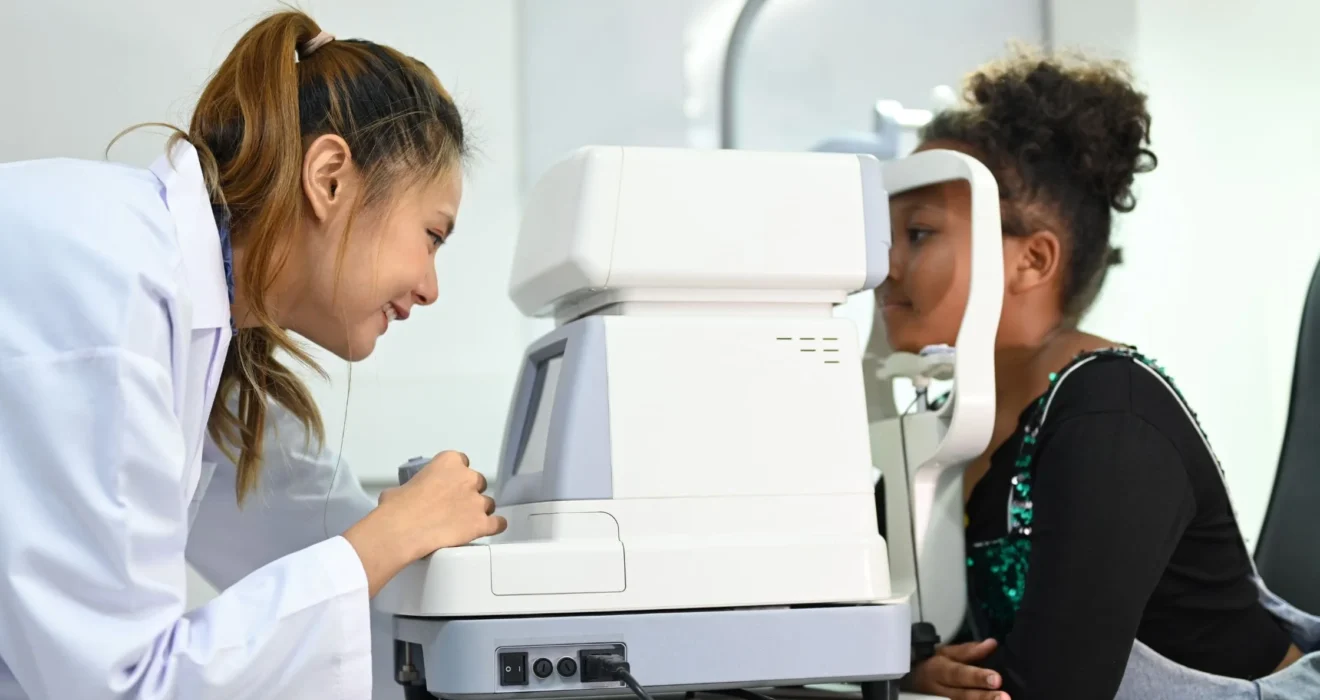
A stationary tabletop autorefractometer requires strict patient cooperation, upright seating, precise chinrest alignment, and steady fixation. In pediatric ophthalmology, geriatric care, bedridden hospital wards, or high-volume outreach camps, achieving these conditions is often difficult or impossible.
This clinical demand has accelerated the development of the high-precision portable autorefractometer. Integrating advanced wavefront sensors, infrared photo-refraction, and artificial intelligence, modern handheld autorefractometers deliver laboratory-grade refractive data in seconds—regardless of patient posture or mobility.
For hospital directors, Chief Medical Officers (CMOs), senior ophthalmologists, and procurement heads looking to maximise clinical throughput, choosing the right handheld refractive technology is a high-impact capital decision. As a premier ophthalmic equipment supplier with over 27 years of institutional service across India, Mediscience Devices provides this comprehensive technical buyer’s guide evaluating the top handheld autorefractometers and vision screeners available today.
The Optical Evolution: Tabletop vs. Portable Autorefraction
To evaluate capital investments in ophthalmology equipment, purchasing committees must understand the optical principles governing objective refraction and how mobile platforms achieve diagnostic parity with desktop systems.
Optical Physics of Modern Autorefraction
Traditional tabletop refractometers rely on Scheiner-principle mire projections or near-infrared light beams reflected off the retina, using motor-driven fogging targets to relax patient accommodation. While highly accurate for cooperative adults, any eye movement or head tilt degrades measurement accuracy.
Modern handheld portable autorefractometer systems utilise two primary advanced optical architectures:
Infrared Photorefraction: Projects infrared light through the pupil onto the retina. The returning reflected light forms a characteristic brightness pattern across the pupil plane. By analyzing the light distribution across both pupils simultaneously, the device calculates sphere, cylinder, axis, and pupillary distance (PD) from a non-contact distance of one meter in under a second.
Hartmann-Shack Wavefront Sensing: Passes a narrow laser beam into the eye, forming a point source focus on the retina. The reflected wavefront travels back through the eye’s optical media and passes through a micro-lenslet array, focusing onto a high-definition sensor. Deviations in the spot pattern reveal lower-order aberrations (myopia, hyperopia, astigmatism) and higher-order optical aberrations.
Key Clinical and Commercial Drivers for Enterprise Adoption
Integrating mobile refractive devices into your facility’s eye equipment list provides distinct operational advantages:
Unrestricted Patient Positioning: Measure uncooperative toddlers sitting in a parent’s lap, bedridden patients in hospital wards, or wheelchair-bound individuals without forcing uncomfortable chinrest adjustments.
Elimination of OPD Pre-Screening Bottlenecks: A portable unit allows paramedical staff to perform objective refraction in the waiting area during peak hours, reducing patient wait times and increasing daily consultation capacity.
Early Amblyopia Screening: Detect amblyogenic risk factors—such as high hyperopia, myopia, anisometropia, and significant astigmatism—in infants as young as six months before irreversible visual loss occurs.
In-Depth Product Analysis: Top 4 Portable Autorefractometers
To assist clinical procurement committees in sourcing genuine, high-yield ophthalmic equipment, Mediscience Devices provides an in-depth evaluation of four leading handheld refractive systems.
1. Plusoptix Portable Autorefractometer A12R
The Plusoptix A12R is globally recognised as the gold standard for binocular pediatric photo-refraction and vision screening. Engineered in Germany, it is specifically designed to eliminate the fear factor associated with traditional eye examinations in young children.
Optical Engine & Methodology: Operates on harmless infrared binocular photo-refraction. It captures simultaneous measurements of both eyes in under 0.8 seconds from a comfortable non-contact distance of exactly one meter.
Fixation & Patient Engagement: Features an un-intimidating smiley face housing with an integrated warbling sound generator and flashing LED light patterns. This naturally attracts an infant’s attention, encouraging steady fixation long enough to complete the capture.
Clinical Data Capture: Measures spherical equivalent, cylindrical value, axis, pupil sizes, pupillary distance (PD), and gaze symmetry (corneal reflexes to detect strabismus). Operates accurately on un-dilated pupils down to 3.0 mm.
Data Integration & Power: Powered by standard rechargeable AA batteries, featuring internal patient database storage, SD card export, Wi-Fi connectivity, and direct wireless printing of customized patient screening certificates.
Target Application: Pediatric ophthalmology suites, tertiary eye hospitals, school vision screening drives, and specialized strabismus clinics.
Designed for high-throughput clinical OPDs, optical retail chains, and community vision centers, the Remidio InstaRef R20 combines handheld convenience with robust optical repeatability.
Optical Engine & Methodology: A lightweight, battery-operated handheld autorefractometer designed for intuitive point-and-shoot operation. It utilizes an automated optical focus system that captures objective refraction data once proper alignment is achieved.
Workflow Acceleration: The intuitive touchscreen interface and automated visual alignment targets allow paramedical staff, optometrists, and vision center technicians to perform accurate refractions with minimal onboarding.
Clinical Capabilities: Delivers immediate measurement of sphere, cylinder, and axis values with high correlation to traditional tabletop ref-keratometer readings.
Connectivity & Connectivity: Features integrated Bluetooth and Wi-Fi modules for instant wireless transmission of refractive prescriptions to thermal printers or direct synchronization with cloud-based Electronic Health Record (EHR) systems.
Target Application: High-volume adult OPD pre-screening lanes, rural vision centers, optical retail chains, and mobile eye care vans.
3. Forus Portable AR 3Nethra Aberro
Developed by Forus Health, the 3Nethra Aberro is a handheld, wavefront-guided portable autorefractometer designed to deliver objective refractive precision in both clinical lanes and remote field conditions.
Optical Engine & Methodology: Powered by Shack-Hartmann wavefront sensing technology. By mapping optical wave aberrations as light passes through the cornea and lens, it calculates precise objective refraction even in eyes with mild media haze or irregular astigmatism.
Ergonomics & Durability: Engineered with a compact, rugged housing built to withstand transport during intensive field screening operations. Its long-lasting internal lithium battery supports hundreds of continuous examinations on a single charge.
Clinical Capabilities: Accurately measures sphere (-12.00D to +12.00D), cylinder (0.00D to -6.00D), and axis (1° to 180°), providing reliable baseline prescriptions for corrective eyewear.
Connectivity & Storage: Features onboard memory for storing patient files, USB data extraction, and wireless printing capabilities for immediate prescription delivery in field settings.
Target Application: Primary vision centers, non-profit outreach missions, government screening initiatives, and general ophthalmology clinics.
Representing the fusion of artificial intelligence and cloud computing, the AI Optic Vision Screener is an advanced, tech-driven solution designed for rapid, population-scale vision screening.
Optical Engine & Methodology: Uses advanced infrared photorefraction combined with deep-learning AI algorithms hosted on a secure cloud processing engine. The system analyzes the reflected pupil image in real time to calculate optical refraction and detect vision threats.
Intelligent Triage Reporting: Automatically processes complex optical data into a simplified, easy-to-read “Pass” or “Refer” summary report, flagging amblyopia, myopia, hyperopia, astigmatism, and anisometropia. This enables paramedical staff and school nurses to conduct large-scale screenings without misinterpreting raw numbers.
Clinical Capabilities: Non-invasive, binocular measurement protocol performed from a one-meter distance, requiring no pupil dilation or physical contact.
Cloud Infrastructure: Automatically syncs screening data to a centralized cloud portal, facilitating remote oversight by senior ophthalmologists and supporting tele-ophthalmology networks.
Target Application: Corporate health checkups, school screening campaigns, tele-ophthalmology networks, non-governmental public health drives, and institutional hospitals.
Master Technical Comparison Matrix
To assist hospital purchasing committees and lead optometrists in selecting the exact device for their operational model, the comparative matrix below outlines key technical parameters:
| Feature / Specification | Plusoptix A12R | Remidio InstaRef R20 | Forus 3Nethra Aberro | AI Optic Screener |
| Measurement Principle | Infrared Photo-Refraction | Automated Optical Refraction | Shack-Hartmann Wavefront | AI Photo-Refraction |
| Measurement Mode | Binocular (Simultaneous) | Monocular | Monocular | Binocular (Simultaneous) |
| Working Distance | 1.0 Meter (Non-Contact) | Close Contact / Proximity | Close Contact / Proximity | 1.0 Meter (Non-Contact) |
| Target Patient Group | Pediatrics & Uncooperative | Adults & General OPD | General OPD & Field Camps | Public Health & Schools |
| Fixation Assistance | Warbling Sound & Flashing LED | Internal Alignment Target | Internal Target Reticle | Visual LED Pattern |
| Pupil Diameter Min. | 3.0 mm | 2.5 mm | 2.5 mm | 3.0 mm |
| Power Architecture | Rechargeable AA Batteries | Internal Rechargeable Li-ion | Internal Rechargeable Li-ion | Internal Rechargeable Li-ion |
| Data Output & Sync | Wi-Fi, SD Card, PDF Print | Bluetooth, Wi-Fi, EHR Sync | USB, Wireless Print |
Building a Complete OPD Suite: Essential Eye Equipment List
While a portable autorefractometer accelerates the initial objective refraction, outfitting a comprehensive consultation room requires an integrated system of complementary ophthalmology equipment and ophthalmic supplies:
Anterior Segment Diagnostic Bay: High-magnification slit lamp biomicroscopes equipped with Goldmann applanation tonometers for routine corneal inspection, anterior chamber grading, and intraocular pressure (IOP) measurement.
Refraction & Subjective Verification Lane: Motorized refraction units housing manual or digital phoropters, trial lens sets, trial frames, and LCD distance acuity charts.
Posterior Segment Diagnostic Suite: Handheld wireless ocular ultrasound B-scans (such as the Matrix Fujitron EU-1C) and non-mydriatic digital fundus cameras for visualizing retinal pathologies through mature cataracts or vitreous opacities.
Essential Ophthalmic Supplies: High-grade diagnostic fluorescein strips, sterile tear test strips, sanitary chinrest papers, medical-grade optical wipes, and single-use tonometer prisms.
Enterprise Procurement Framework: TCO & ROI Considerations
When healthcare procurement committees evaluate bids for a portable autorefractometer, looking solely at the initial purchase price can lead to inaccurate financial projections. Calculating the true Total Cost of Ownership (TCO) over a 5-to-7-year asset lifecycle involves several critical factors:
CapEx vs. Patient Throughput ROI: A portable vision screener that cuts examination time from 5 minutes to 30 seconds allows an OPD lane to process 40% more patients daily, delivering a rapid return on initial capital investment.
Battery Architecture & Lifespan: Devices utilizing standard rechargeable AA batteries (like the Plusoptix A12R) eliminate reliance on custom proprietary battery packs, lowering long-term battery replacement expenses.
Software Licensing & Cloud Costs: Verify whether the device software requires recurring annual licensing fees for cloud reporting (e.g., AI vision screeners) or provides lifetime local software functionality.
Post-Warranty AMC/CMC Contracts: Sourcing equipment backed by transparent Annual Maintenance Contracts (AMC) and Comprehensive Maintenance Contracts (CMC) protects your facility from unexpected component repair expenses.
The Mediscience Advantage: Your Procurement Partner
Procuring high-precision ophthalmic equipment is an ongoing institutional commitment. Purchasing devices from unauthorised online drop-shippers or unverified grey-market importers exposes your hospital to severe risks—including invalid warranties, uncalibrated optics, and a lack of local spare parts.
Mediscience Devices has served as a premier authorised distributor and service provider across Eastern and North-Eastern India for over 27 years. Headquartered in Kolkata, our distribution network serves West Bengal, Bihar, Jharkhand, Odisha, Assam, Tripura, Nagaland, Mizoram, Manipur, Meghalaya, and Chhattisgarh.
Why Healthcare Institutions Partner with Mediscience:
Direct Manufacturer Authorization: We supply 100% genuine products directly from global engineering manufacturers, backed by official factory warranties.
Turnkey On-Site Deployment: Our team of factory-trained biomedical engineers manages doorstep delivery, physical assembly, precision optical calibration, and thorough application training for your medical staff.
Zero-Downtime Guarantee: We maintain local depots of spare optical sensors, circuit boards, and battery modules in Kolkata. If a device requires maintenance, we offer rapid engineer dispatch and temporary standby loaner units to keep your OPD fully operational.
Transparent B2B Pricing: Factory-direct pricing without unnecessary middleman markups ensures maximum capital efficiency for your facility.
Elevate Your Refraction Workflow Today
Modernising your facility’s refractive screening workflow with a high-performance portable autorefractometer enhances diagnostic accuracy, eliminates OPD pre-screening bottlenecks, and expands your clinical reach into community outreach. Whether you choose the pediatric precision of the Plusoptix A12R, the rapid workflow of the Remidio InstaRef R20, the wavefront clarity of the Forus 3Nethra Aberro, or the AI-driven triage of the AI Optic Screener, Mediscience Devices provides the authentic hardware, transparent pricing, and local technical support your institution requires.
Take the next step in optimising your clinical workflow.
Contact the B2B Procurement Division at Mediscience Devices today to request an official quotation, inquire about institutional bulk pricing, or schedule an on-site clinical demonstration.
People Also Ask
A tabletop autorefractometer is a stationary unit requiring the patient to sit upright with their chin placed on a rest, making it ideal for fixed optometry lanes. A portable autorefractometer is a lightweight, handheld device that measures refractive errors from a non-contact distance or at the bedside, making it essential for pediatric patients, bedridden individuals, wheelchair-bound patients, and mobile screening camps.
Modern handheld vision screeners and portable autorefractometers utilize advanced optical technologies—such as infrared photorefraction and Shack-Hartmann wavefront sensing—delivering objective refractive measurements that correlate closely with standard tabletop systems. They are highly reliable for identifying significant refractive errors, astigmatism, and amblyogenic risk factors.
Yes. Most portable autorefractometers and vision screeners (such as the Plusoptix A12R and AI Optic) are engineered to capture accurate binocular or monocular measurements on un-dilated pupils down to 2.5 mm or 3.0 mm, making pre-examination screening fast and comfortable for the patient.
Binocular photorefraction measures both eyes simultaneously from a comfortable working distance of one meter. Because the device does not touch the child or require tight physical positioning, and uses engaging light/sound targets, it prevents examination anxiety and captures accurate measurements before the child loses focus.
Healthcare facilities can buy genuine, factory-certified portable autorefractometers through Mediscience Devices. Based in Kolkata, Mediscience provides full warranty coverage, doorstep installation, optical calibration, staff training, and rapid technical service support across Eastern and North-Eastern India.