
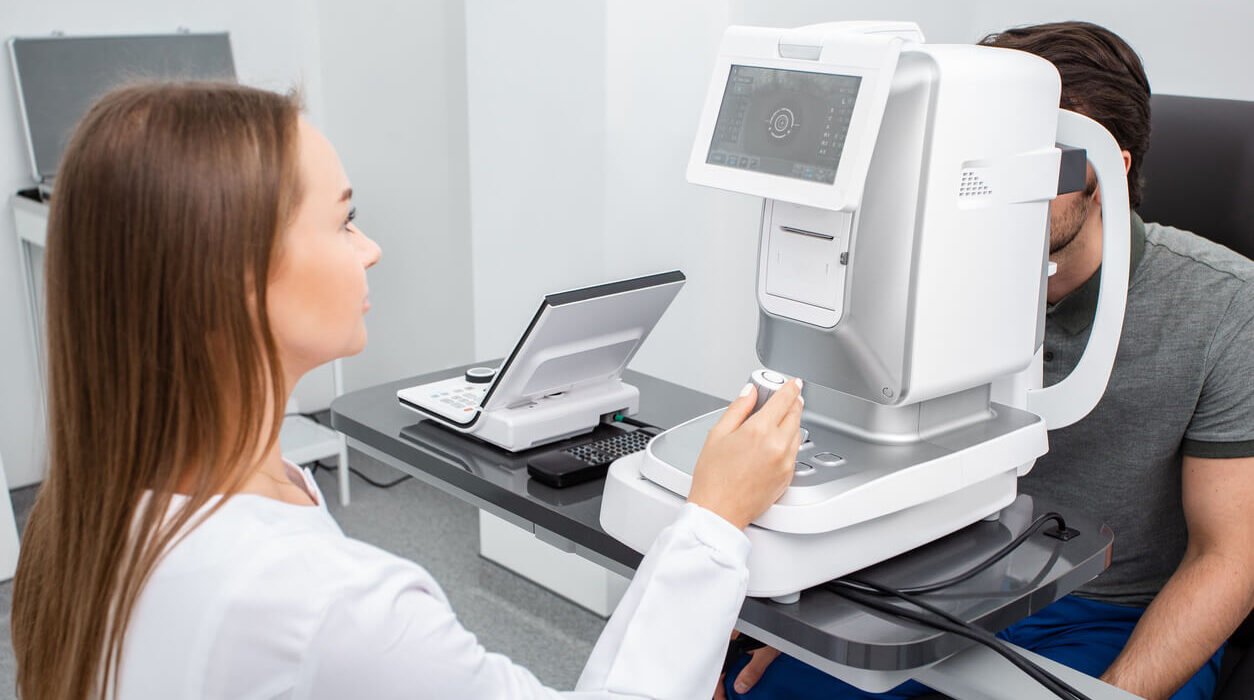
The Digital Transformation of the OPD: Upgrading Ophthalmology Equipment for the Modern Practice
The modern Outpatient Department (OPD) in eye care is undergoing a profound structural evolution. For decades, clinical throughput depended heavily on manual diagnostic workflows—ranging from trial lens sets and manual retinoscopy to standalone, analog optometry tools. Today, as patient volumes surge and healthcare delivery shifts toward precision diagnostics and electronic medical record (EMR) integration, relying on legacy systems creates severe operational bottlenecks.
Upgrading your clinical facility with state-of-the-art ophthalmology equipment is no longer just a hardware refresh; it is a core business strategy that directly impacts patient satisfaction, diagnostic accuracy, and practice profitability.
At the heart of this digital transformation is the refraction suite. Transitioning from manual refraction to interconnected, automated optical platforms allows healthcare facilities to reduce patient chair time, eliminate human transcription errors, and optimize clinical workflows.
This enterprise guide explores how modern ophthalmic equipment—specifically advanced refraction and diagnostic systems—drives the digital transformation of modern eye hospitals and private clinics.
The Digital Imperative: Moving Beyond Analog Optometry Equipment
In a high-volume eye care setting, the pre-examination lane represents the primary operational bottleneck. Traditional manual objective refraction requires significant time, skilled manpower, and high patient cooperation.
When a clinic relies on outdated optometry equipment, patient wait times increase, technician fatigue sets in, and minor human errors during manual data entry can compromise downstream surgical or corrective outcomes.
Strategic Benefits of Digital OPD Integration:
Accelerated Patient Triage: Modern automated diagnostic tools capture comprehensive refractive and corneal metrics in seconds, allowing your facility to handle 30% to 50% higher daily patient volumes without expanding physical floor space.
Seamless EHR & HIS Synchronization: Digitized optical equipment exports objective measurements directly into Electronic Health Record (EHR) and Hospital Information System (HIS) platforms via DICOM or local Wi-Fi networks, eliminating paper prescription slips entirely.
Enhanced Diagnostic Repeatability: Automated 3D eye-tracking and auto-alignment engines remove operator-dependent variability, ensuring consistent baseline measurements across all clinical technicians.
The Core Diagnostic Workhorse: Automated Refractors & Keratometers
The foundation of any modern refraction suite is the auto refractometer. By projecting near-infrared light into the eye and analyzing the reflected image on the retina, an automated refractometer calculates the patient’s sphere, cylinder, and axis values instantaneously.
However, modern engineering has transformed the standalone auto refractometer machine into a multi-modal diagnostic hub.
The Power of the Auto Refractometer Keratometer (AR-K)
Instead of sourcing separate instruments for objective refraction and corneal curvature analysis, modern eye hospitals deploy an integrated auto refractometer keratometer.
Simultaneous Measurement: Captures objective refractive error alongside corneal curvature radii (K1 and K2), corneal astigmatism axis, and peripheral corneal power in a single measurement sequence.
Essential for Cataract & Contact Lens Workflows: An advanced auto keratometer capability is mandatory for selecting baseline Intraocular Lens (IOL) power prior to cataract surgery and mapping initial parameters for Rigid Gas Permeable (RGP) or Ortho-K contact lens fittings.
Wavefront-Guided Precision: The best auto refractometer models utilize Hartmann-Shack wavefront sensors to map higher-order aberrations, providing reliable diagnostic data even in patients with small pupils (down to 2.0 mm) or early cataractous media haze.
Upgrading to a high-grade ophthalmic auto refractometer ensures that your clinic captures baseline optical data with absolute precision before the patient ever steps into the doctor’s consultation room.
Decentralizing Eye Care: Portable and Handheld Auto Refractometers
While tabletop diagnostic consoles remain essential fixtures in fixed consultation lanes, modern clinical delivery extends far beyond the hospital walls. Pediatric examinations, bedridden hospital ward rounds, wheelchair-bound patients, and rural community screening camps require mobile diagnostic agility.
This operational demand has driven the rapid adoption of the portable auto refractometer.
Clinical Advantages of the Handheld Auto Refractometer
A handheld auto refractometer packs advanced infrared photorefraction or wavefront sensing technology into a lightweight, battery-powered housing.
Pediatric & Non-Cooperative Screening: Measuring refractive errors in infants, toddlers, or patients with developmental delays is notoriously difficult on tabletop chinrests. A portable auto refractometer allows clinicians to capture accurate binocular readings from a non-contact distance of one meter while the child sits comfortably in a parent’s lap.
Field-Ready Durability: Rugged, battery-operated auto refractometer portable devices enable non-profit organizations and hospital outreach teams to conduct large-scale vision camps in remote locations without requiring AC power infrastructure.
Integrated Portable Keratometry: Advanced handheld units also function as a portable keratometer, allowing surgeons to measure corneal curvature at the bedside for bedridden patients or post-operative reviews.
Equipping your practice with both stationary and mobile eye equipment ensures that no patient—regardless of mobility or location—is left undiagnosed.
Financial Analysis & Procurement: Navigating Prices and ROI
When hospital procurement committees evaluate capital investments in ophthalmic equipment, balancing technical performance against financial return is paramount. Understanding the factors that drive hardware pricing helps administrators allocate capital effectively.
Understanding the Autorefractometer Price Spectrum
The autorefractometer price varies significantly based on optical engineering, multi-modal integration, and automation levels:
Entry-Level Desktop Units: Standard objective refractor units that provide baseline sphere and cylinder values. Highly economical for primary optometry shops and basic screening lanes.
Mid-Tier Auto Refractometer Keratometers: Systems incorporating an auto keratometer, automated chinrests, thermal printers, and basic connectivity. Represents the standard investment for established eye clinics.
Premium Multi-Modal Workstations: Flagship devices utilizing Hartmann-Shack wavefront aberrometry, Placido-disc corneal topography, dry eye analysis, and 3D auto-tracking.
Evaluating the Auto Refractometer Price in India
When evaluating the auto refractometer price in India, healthcare administrators must look beyond the initial purchase order and account for the Total Cost of Ownership (TCO):
Import Duties & Warranty Coverage: Ensure that imported optical equipment includes valid local warranty coverage backed by factory-trained biomedical engineers.
Consumable & Software Expenses: Factor in the cost of thermal printing paper, chinrest paper rolls, and potential software licensing fees for cloud EHR connectivity.
Throughput ROI: A high-speed, 3D auto-tracking auto refractometer machine that reduces patient testing time from 3 minutes to 30 seconds allows a high-volume OPD to see more patients daily, delivering a rapid return on investment.
Master Comparison: Refraction Technology Suites
To guide your facility’s procurement team in choosing the right diagnostic setup, the table below compares primary technology form factors:
| Parameter | Tabletop Auto Refractometer Keratometer | Handheld / Portable Autorefractometer | Multi-Modal Topography Workstation |
| Primary Workflow | Standard OPD refraction lanes | Pediatrics, bedridden wards, screening camps | Refractive surgery & premium cataract suites |
| Measurement Distance | Chinrest contact positioning | 1.0 Meter non-contact working distance | Chinrest contact positioning |
| Diagnostic Scope | Refraction + Basic Keratometry | Refraction + Pupil Size (Binocular) | Refraction + Keratometry + 3D Topography |
| Data Mobility | Fixed lane workstation | High mobility (battery operated) | Fixed diagnostic bay |
| EHR Integration | Wi-Fi / Serial / DICOM | Bluetooth / Wi-Fi / App Sync | Full DICOM / HIS Integration |
| CapEx Investment | Mid-Range Investment | Economical to Mid-Range | Premium Investment |
Key Considerations Before Upgrading Your Ophthalmology Equipment
Before issuing a tender or purchase order for new diagnostic devices, hospital procurement heads should run prospective equipment through this operational checklist:
[ ] Automated Alignment & Tracking: Does the device feature motorized 3D auto-tracking (X, Y, Z axes) and auto-firing to reduce operator-dependent error?
[ ] Small Pupil Capability: Can the optical sensor capture accurate refractive readings through small pupils (down to 2.0 mm) without requiring pharmacological dilation?
[ ] Digital Export Standards: Does the unit feature open digital output formats (DICOM, XML, PDF, Bluetooth) to sync with your current or future Electronic Health Record system?
[ ] Local Technical Support: Is the vendor backed by a regional service infrastructure capable of providing rapid on-site calibration, preventative maintenance, and emergency repairs?
The Mediscience Advantage: Your Partner in OPD Digital Transformation
Upgrading your facility’s ophthalmology equipment is an ongoing institutional commitment. Purchasing complex optical instruments from unverified online suppliers or gray-market importers exposes your hospital to severe operational risks, including uncalibrated optics, invalid warranties, and extended downtime.
Mediscience Devices has served as a trusted partner for hospitals, eye institutes, government medical colleges, and private eye clinics across Eastern and North-Eastern India for over 27 years. Headquartered in Kolkata, our distribution network serves West Bengal, Bihar, Jharkhand, Odisha, Assam, Tripura, Nagaland, Mizoram, Manipur, Meghalaya, and Chhattisgarh.
Why Healthcare Facilities Partner with Mediscience:
Direct Manufacturer Authorization: Authorized distribution of genuine products directly from global engineering leaders (including Rexxam, Plusoptix, MediWorks, Labomed, and Fujitron), backed by official factory warranties.
Turnkey On-Site Deployment: Our factory-trained biomedical engineering team handles doorstep delivery, physical assembly, precision optical calibration, and thorough application training for your medical staff.
Zero-Downtime SLAs: We maintain local depots of spare optical sensors, circuit boards, and standby loaner units in Kolkata, guaranteeing rapid engineer dispatch and uninterrupted OPD operations.
Transparent B2B Pricing: Authentic, factory-direct pricing without middleman markups ensures maximum capital efficiency for your facility.
Modernize Your Clinical Workflow Today
Investing in modern ophthalmology equipment transforms your Outpatient Department into a high-speed, digitally integrated diagnostic engine. Whether your facility requires the fixed precision of an advanced auto refractometer keratometer, the mobile flexibility of a handheld auto refractometer, or a complete turnkey refraction suite, Mediscience Devices delivers the authentic technology, transparent pricing, and local technical support your practice requires.
Take the next step in digitizing your clinical workflow.
Contact the B2B Procurement Division at Mediscience Devices today to request an official quotation, explore bulk hospital setup pricing, or schedule a live demonstration of our digital refraction suites.
People Also Ask
An auto refractometer measures only the refractive status of the eye (sphere, cylinder, axis). An auto refractometer keratometer (AR-K) combines two diagnostic functions in one machine, measuring both objective refractive error and corneal curvature (keratometry), which is essential for cataract surgery planning and contact lens fittings.
A portable auto refractometer allows clinicians to perform objective refraction on patients who cannot use a standard tabletop chinrest—including young children, bedridden hospital patients, wheelchair-bound individuals, and participants in rural outreach camps.
Digital ophthalmology equipment features automated eye-tracking, rapid measurement sensors, and direct EMR data sync. This reduces testing time per patient from several minutes to a few seconds, eliminates manual data entry errors, and allows clinical staff to process higher patient volumes efficiently.
The auto refractometer price in India is influenced by optical sensor technology (standard infrared vs. Hartmann-Shack wavefront aberrometry), multi-modal functions (built-in auto-keratometry or topography), 3D auto-tracking capabilities, brand origin, import tariffs, and the availability of local warranty and service SLAs.
Healthcare facilities can procure genuine, factory-certified optical equipment through Mediscience Devices in Kolkata. Serving Eastern and North-Eastern India for over 27 years, Mediscience provides transparent pricing, doorstep installation, optical calibration, staff training, and rapid technical service support.